- Event
- EyeOn Experience Event DACH
- Theme
- Digital transformation, the next chapter: AI in supply chain planning
- Format
- Keynote with live demo, 60 min
- Audience
- About 65 supply chain and business leaders from 45 companies
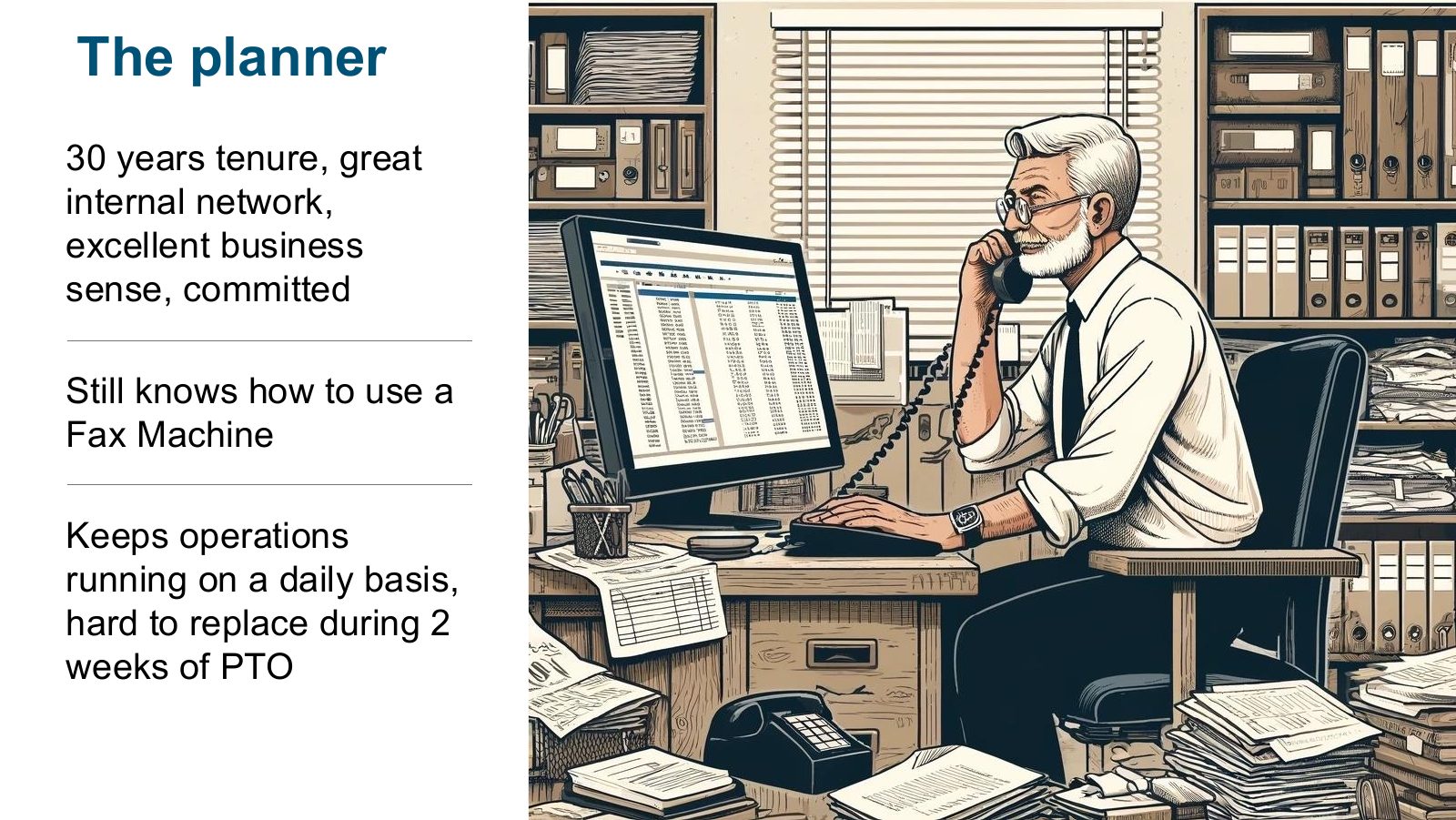
We have spent 30 years and a lot of money on advanced planning systems. Yet most companies still plan in Excel, and experienced planners routinely override what the systems recommend. They are often right to do so. The planner was the system.
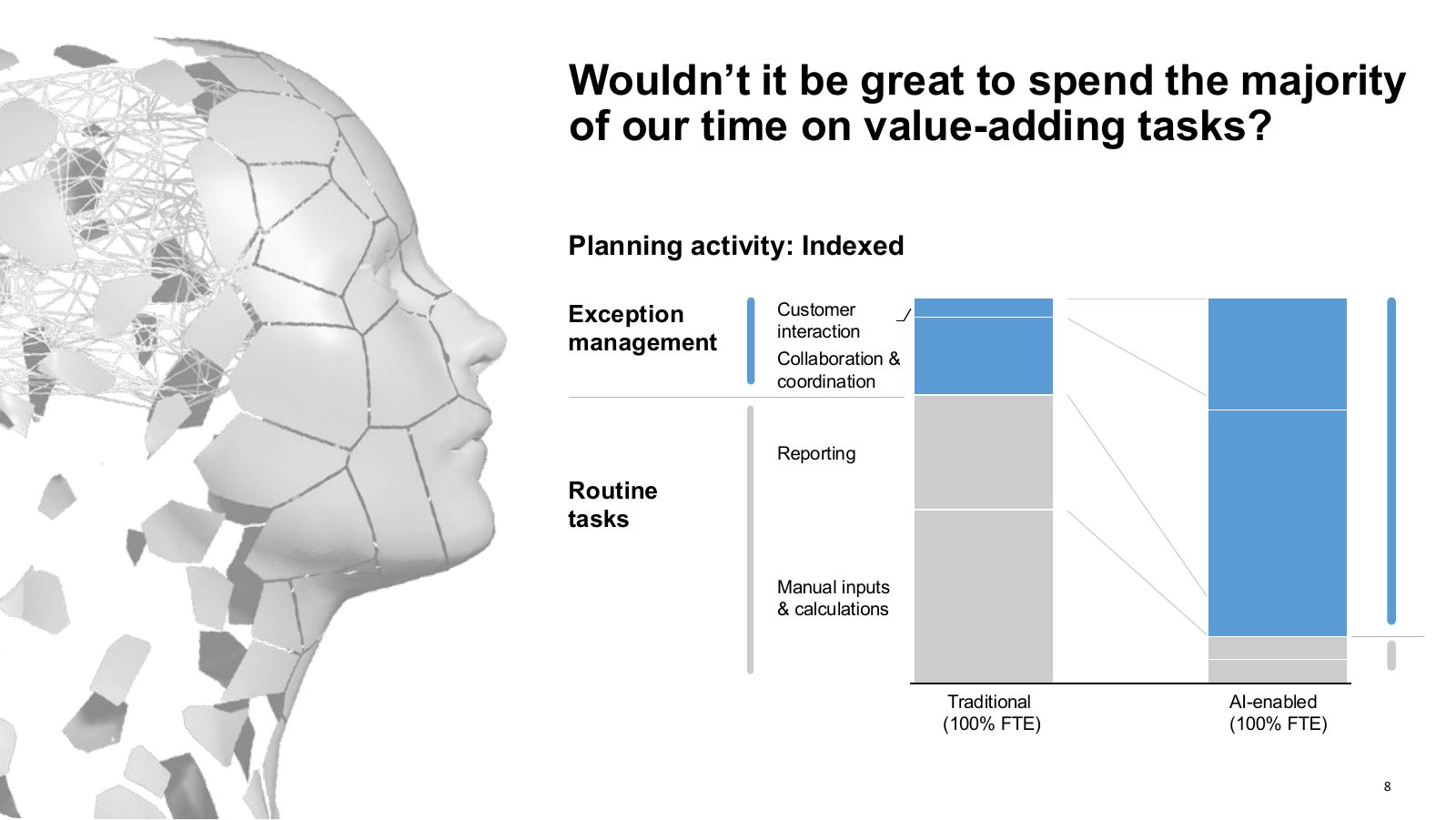
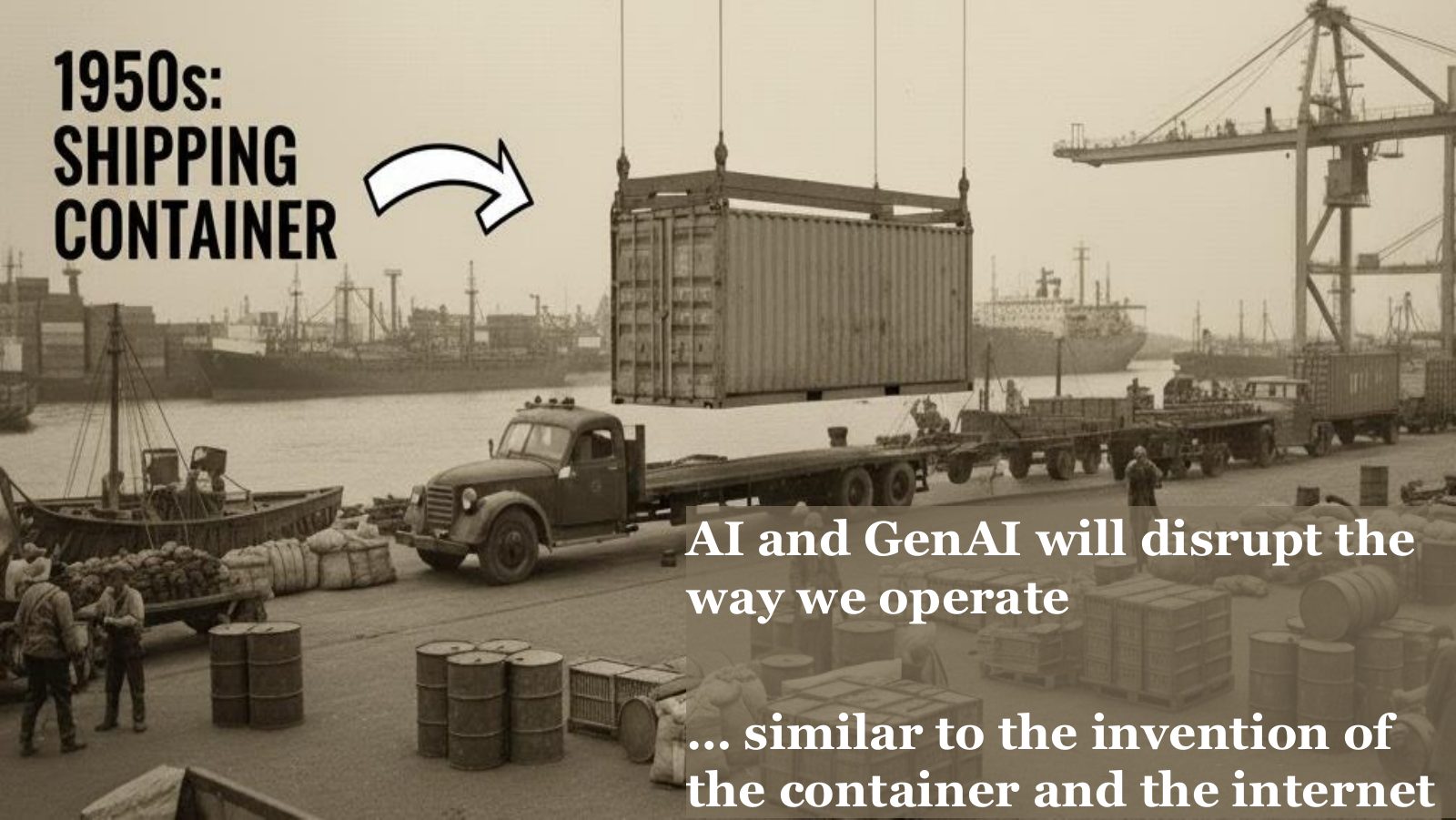
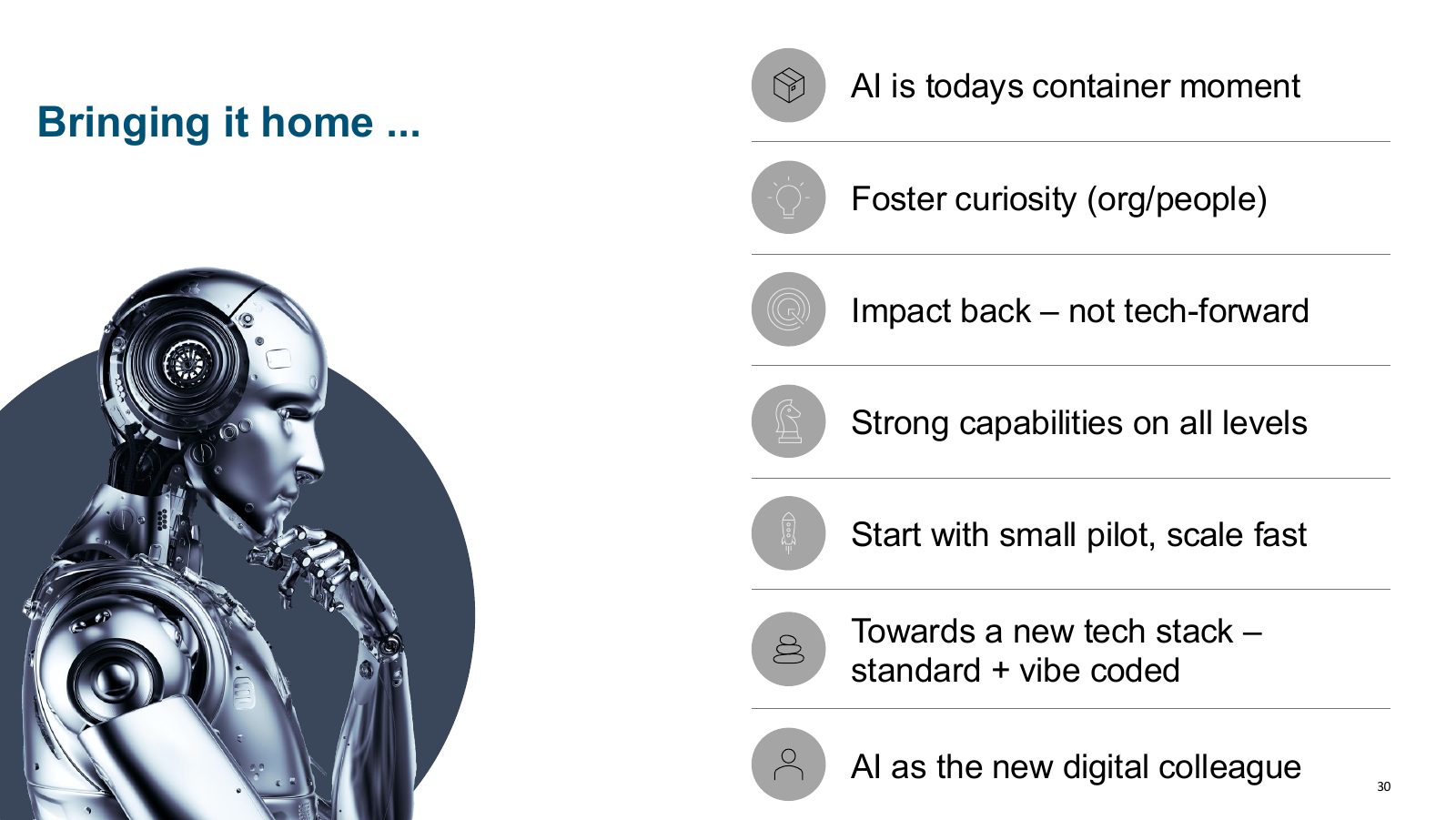
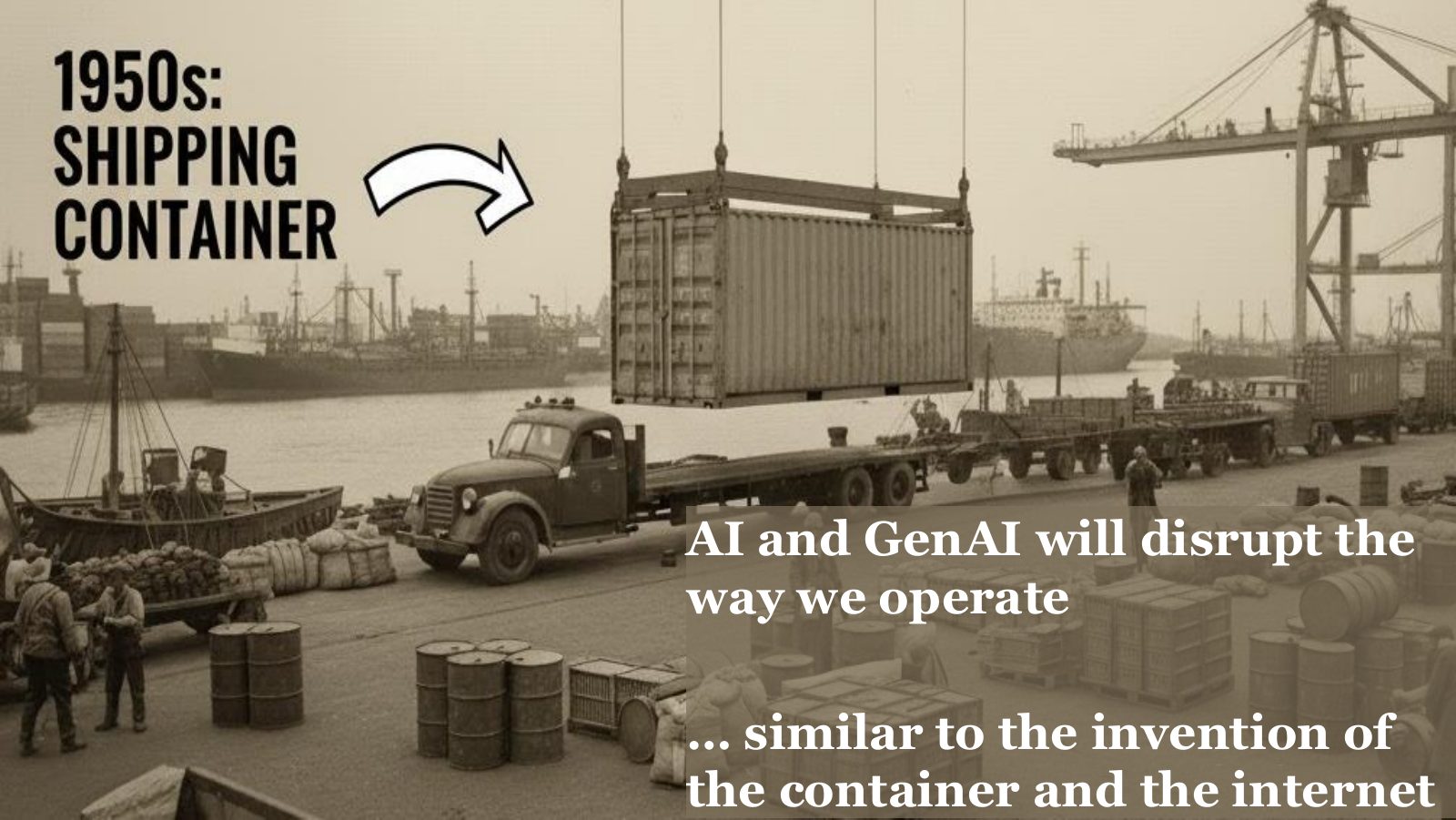
In Frankfurt I argued that GenAI changes this equation, in the same way the container changed global trade: not by replacing the planner, but by finally connecting the planner's experience with the logic of the systems. And I showed it live.
Six messages from the stage
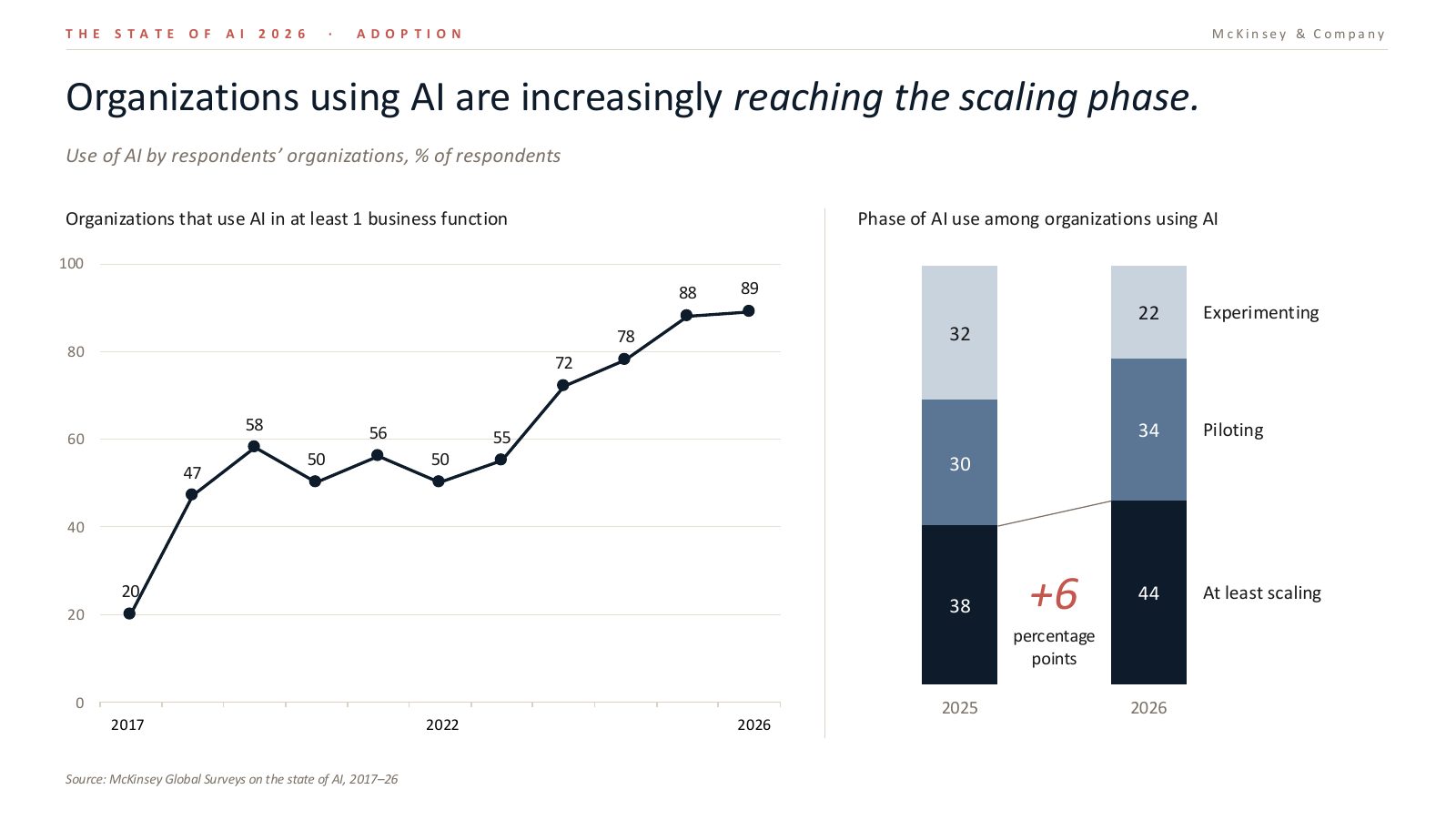
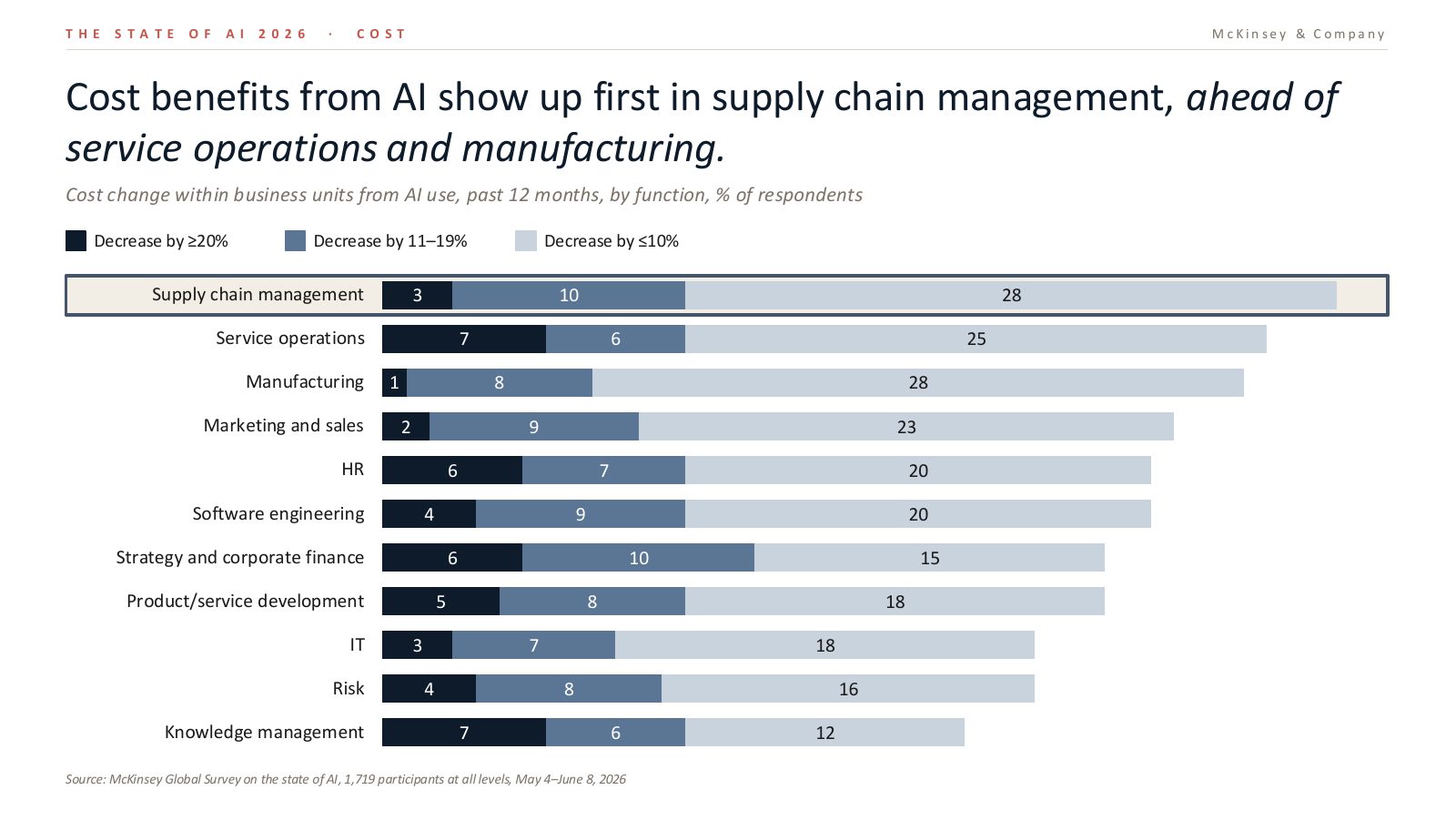
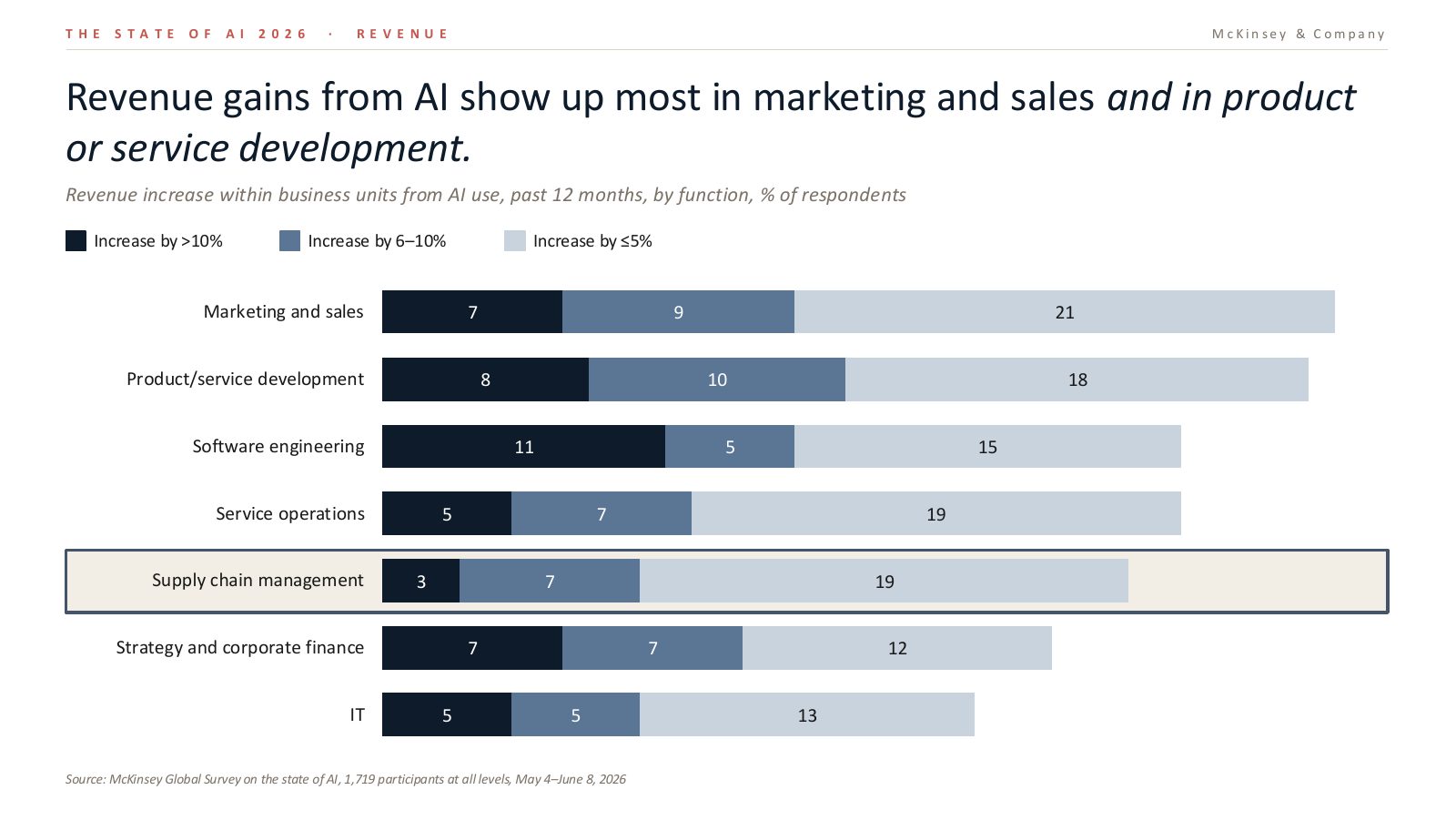
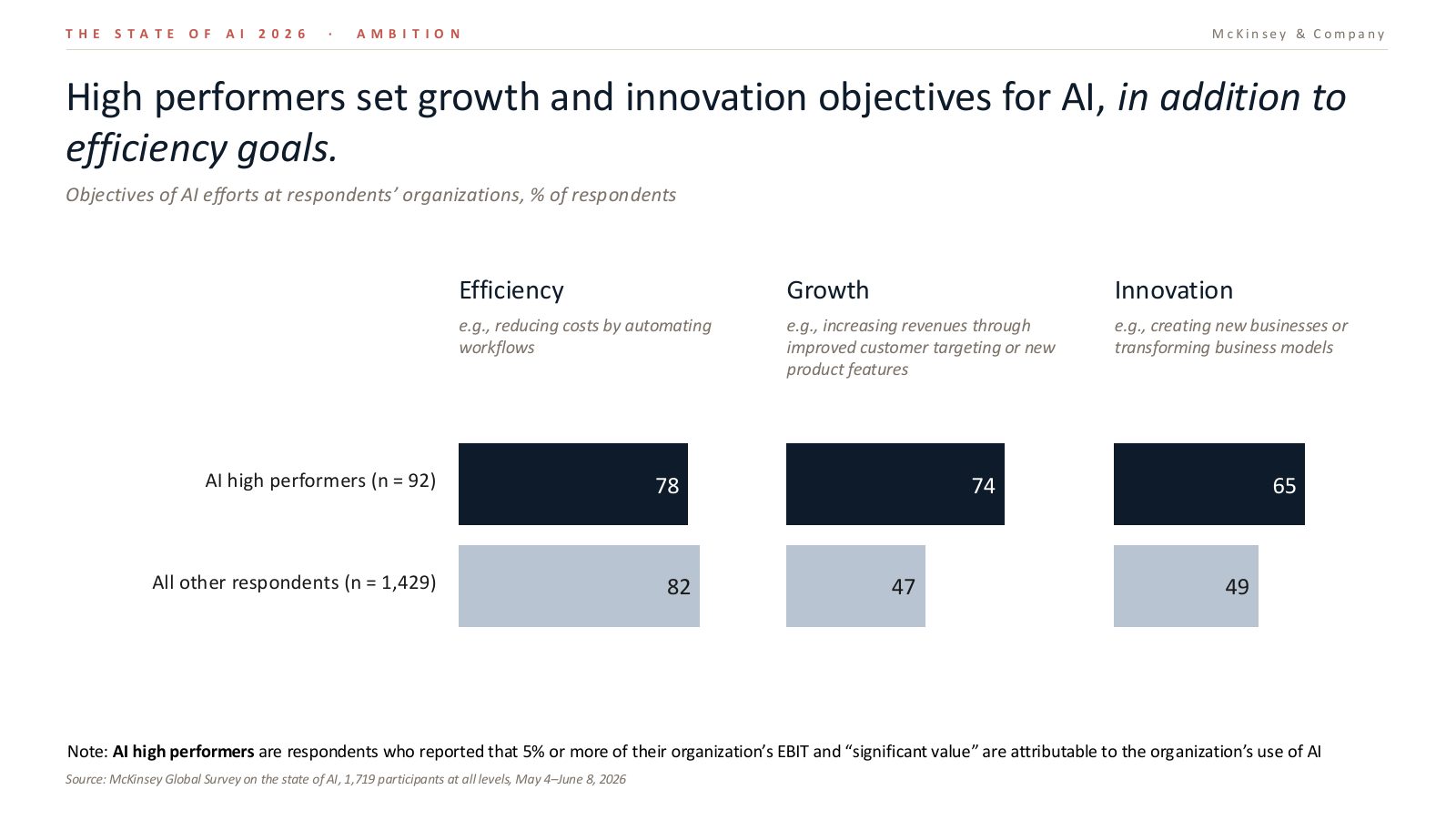
- AI is scaling, and supply chain sees the cost benefits first. The McKinsey State of AI 2026 survey shows 89% of organizations using AI in at least one function and 44% at least scaling. Supply chain management is the function where most respondents report cost reductions from AI.
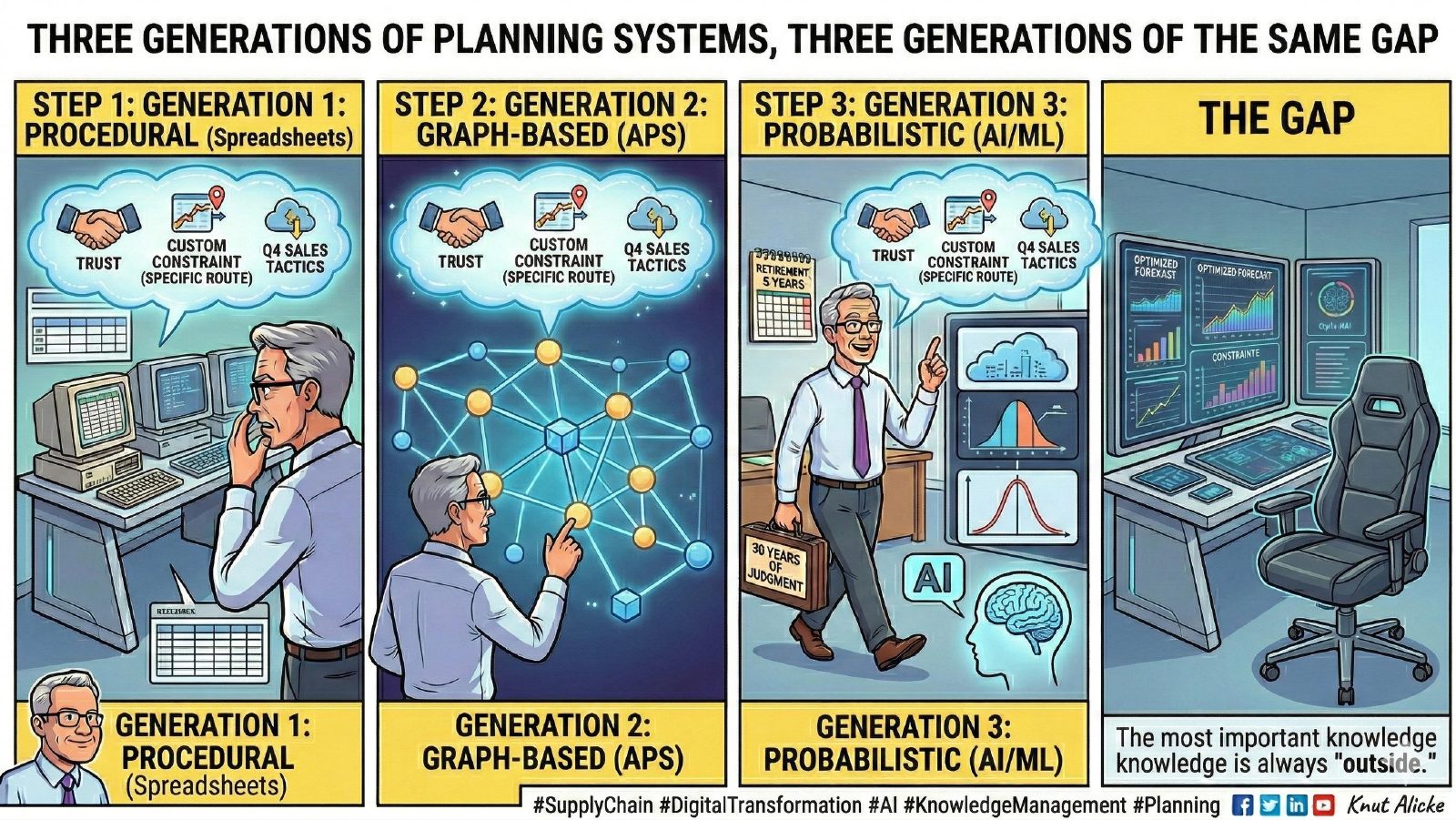
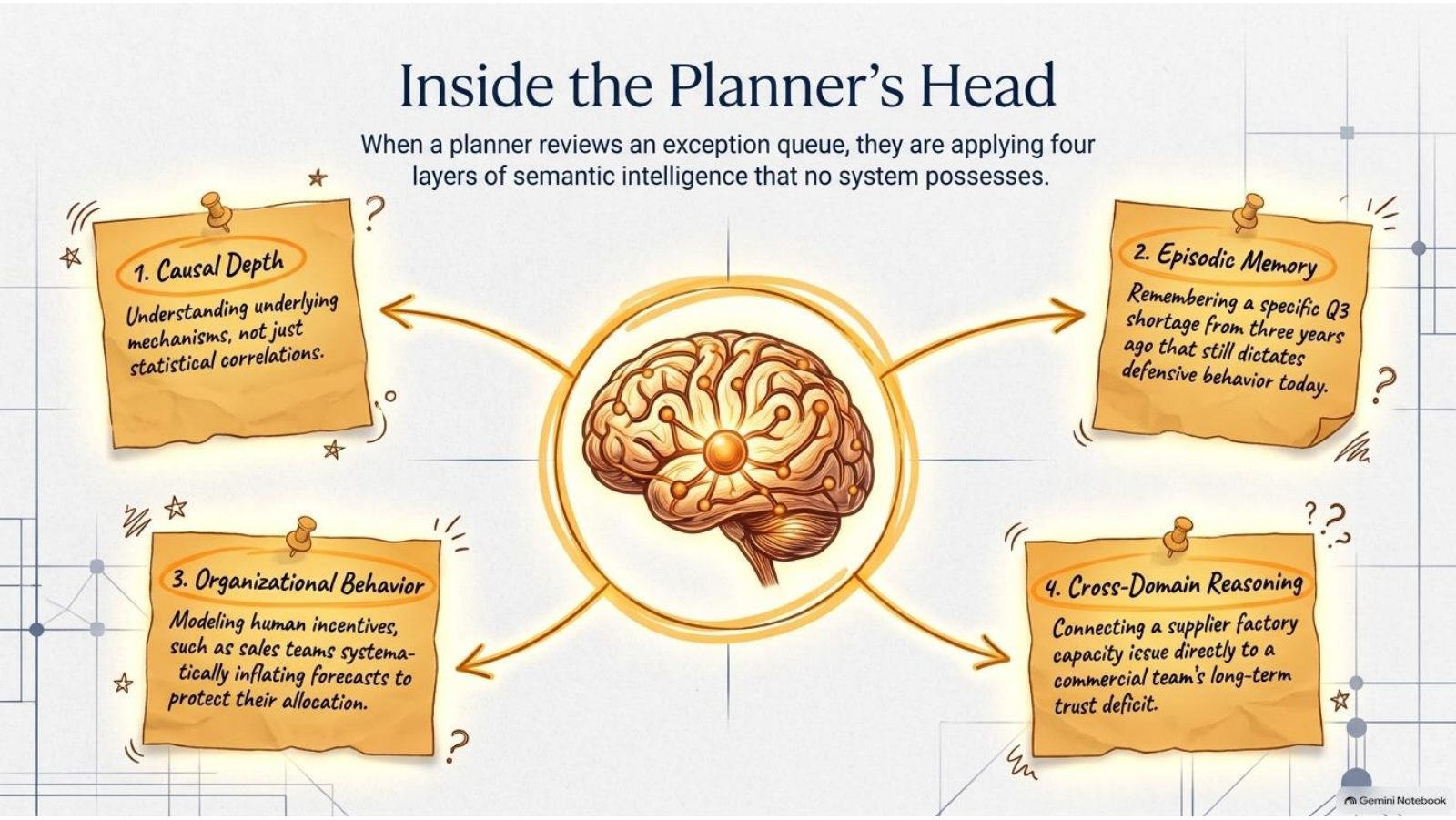
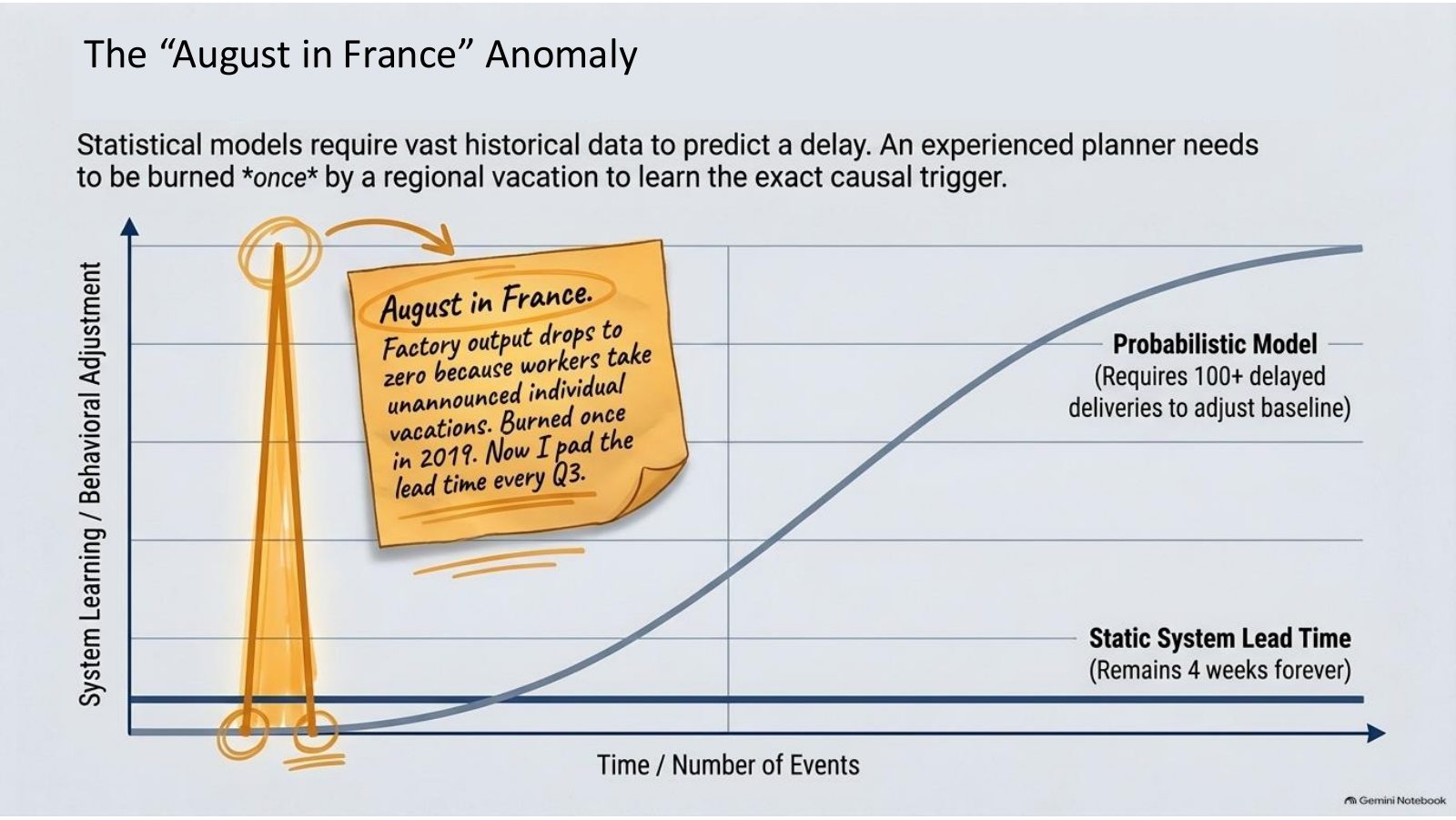
- The planner was the system. Three generations of planning systems (spreadsheets, APS, probabilistic AI/ML) share the same gap. The most important knowledge sits outside: causal depth, episodic memory, organizational behavior and cross-domain reasoning. The 'August in France' example: a planner learns from one burned summer, a statistical model needs more than 100 delayed deliveries.
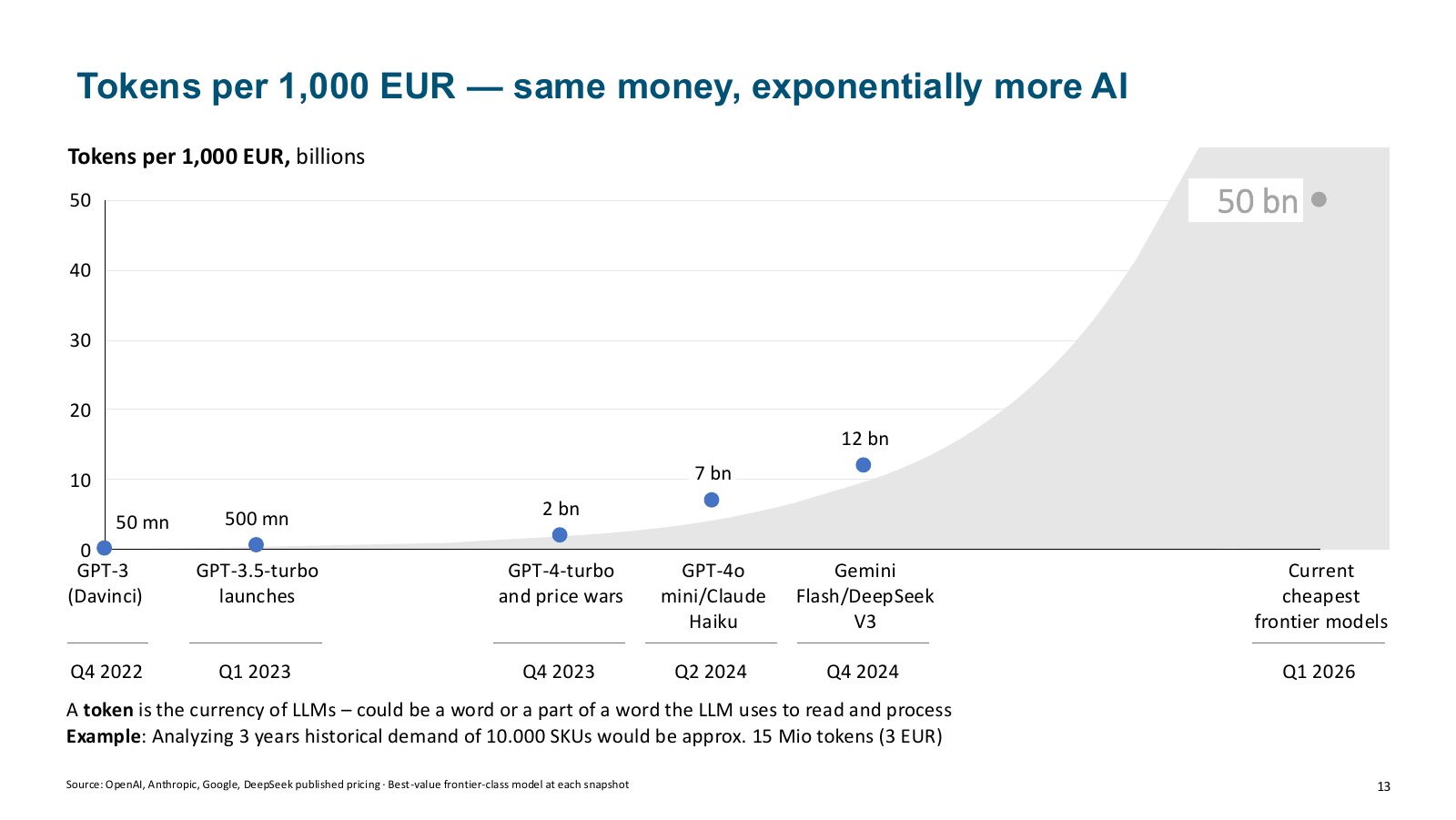
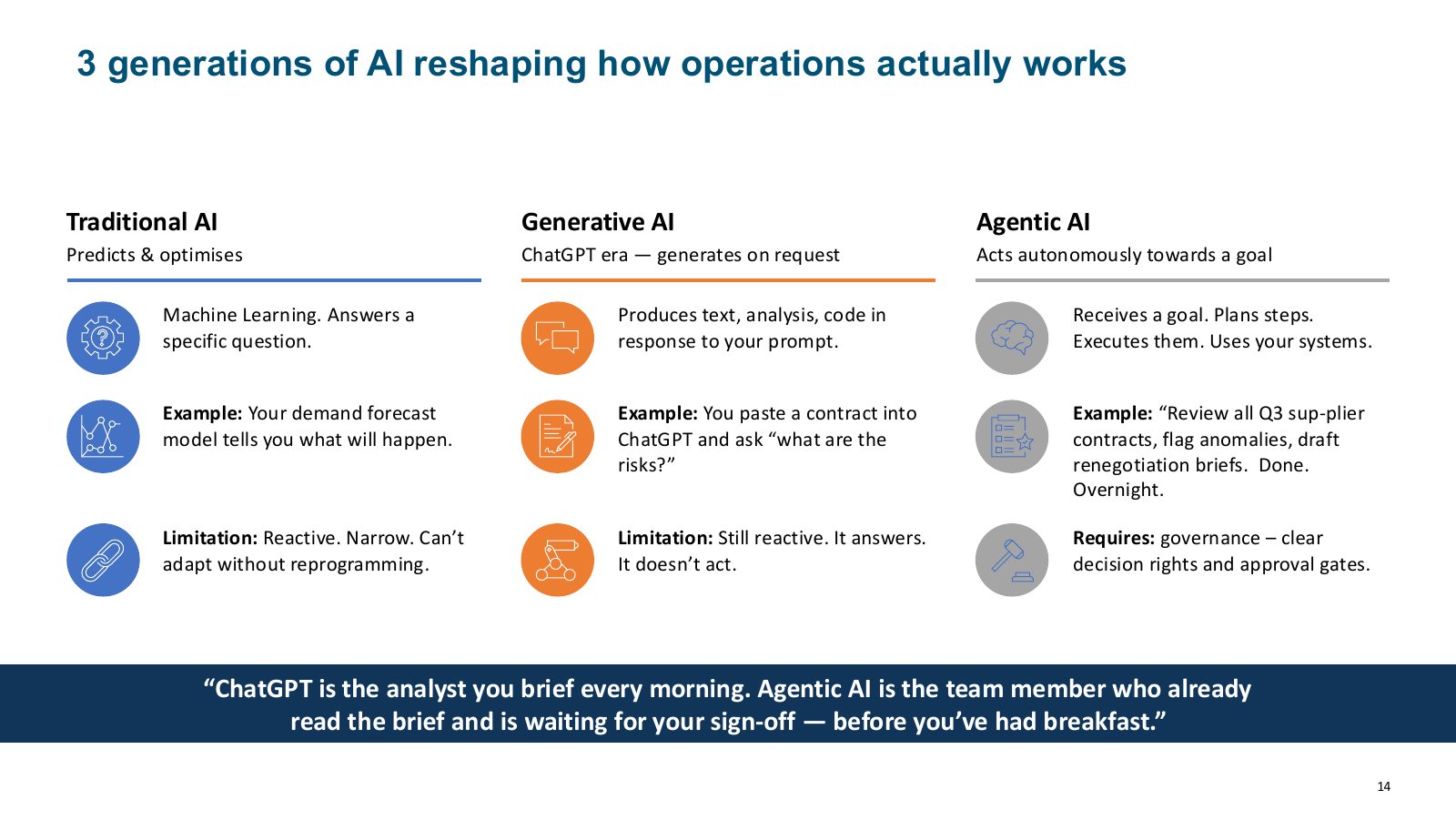
- This is a container moment. For the same 1,000 EUR you bought about 50 million tokens at the end of 2022 and around 50 billion today. Analysing three years of demand for 10,000 SKUs costs about 3 EUR. Traditional AI predicts, generative AI answers, agentic AI acts towards a goal, and needs governance with clear decision rights.
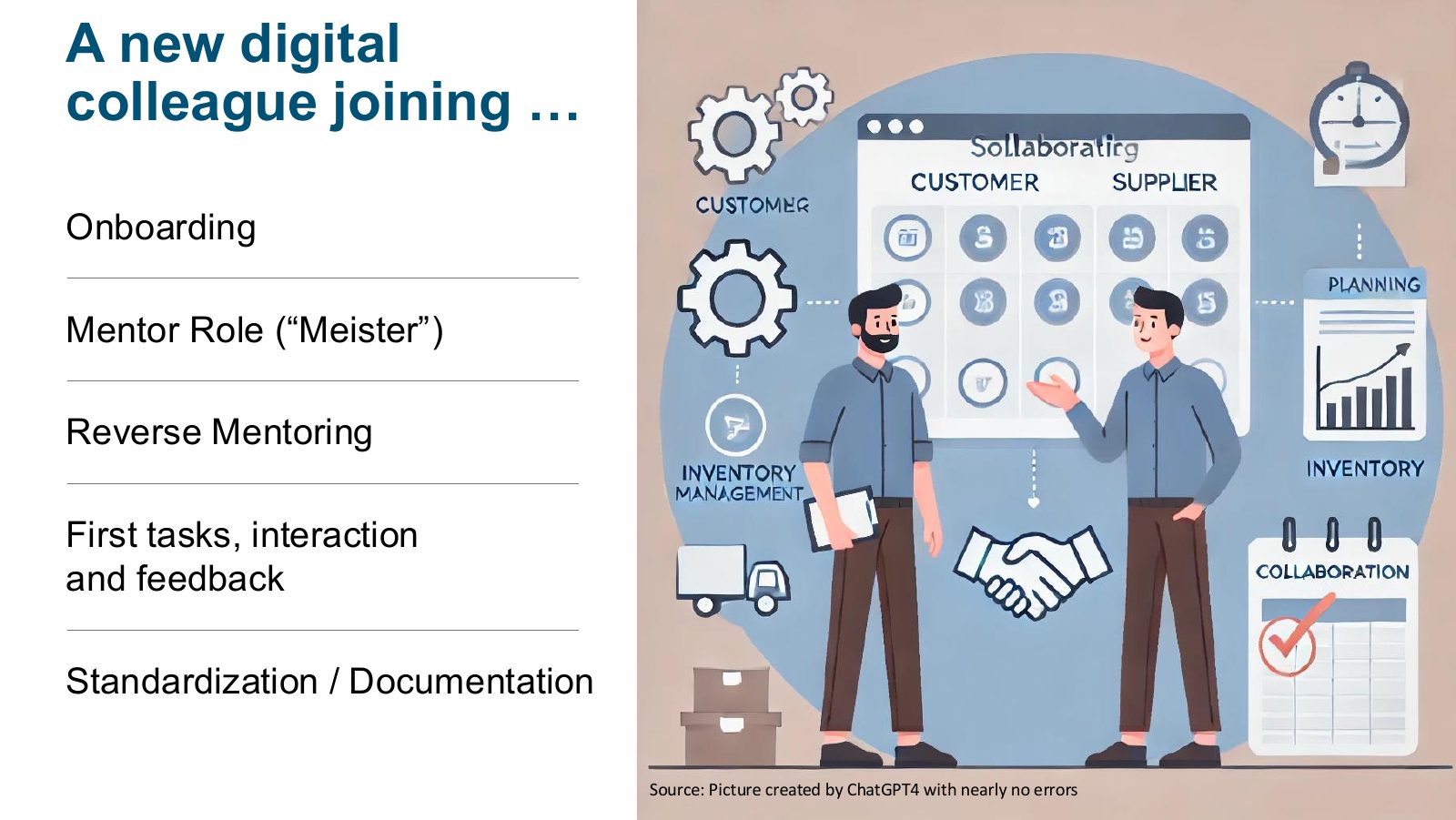
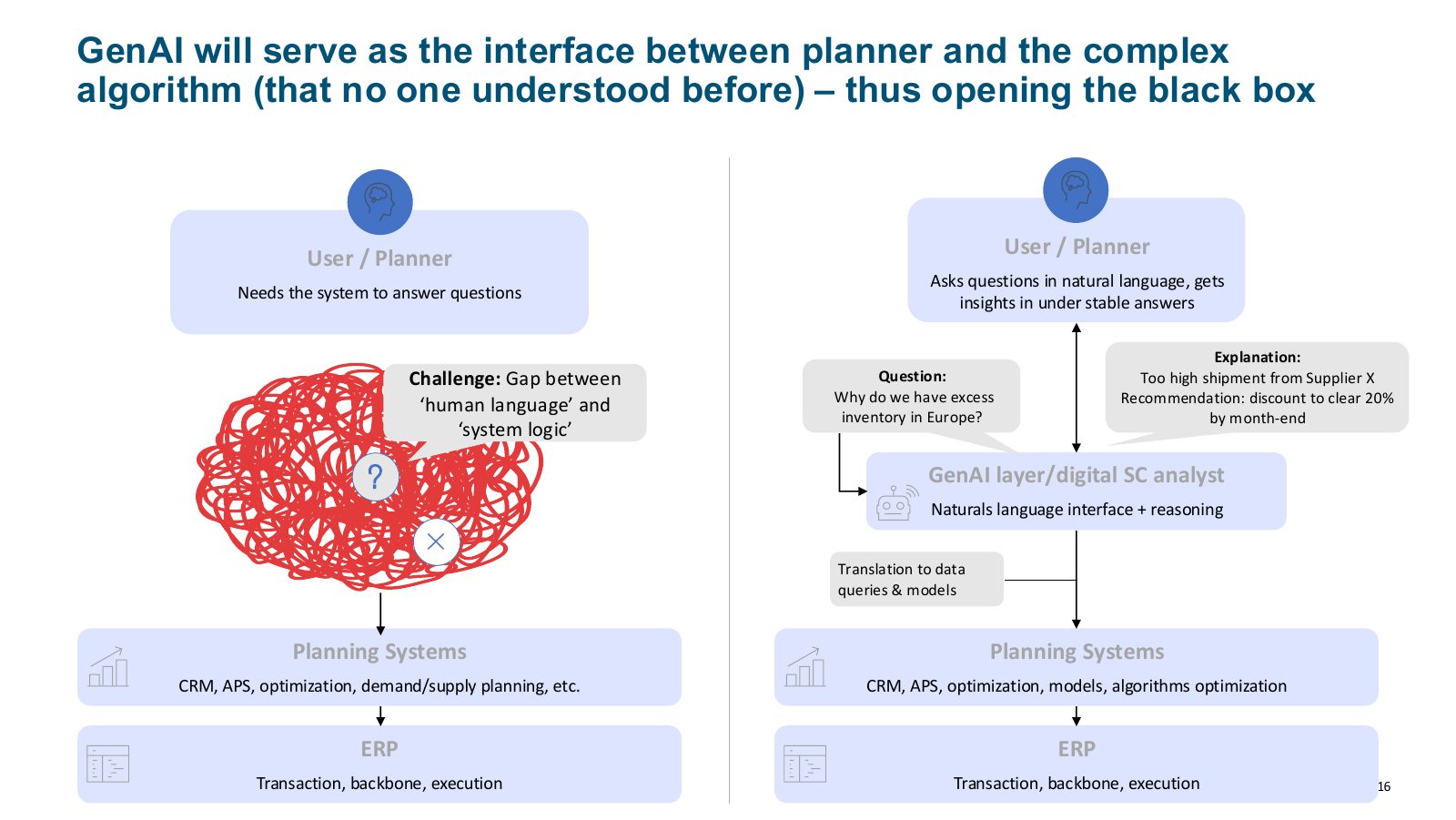
- Onboard AI as a digital colleague. A young colleague who is brilliant at data science but lacks business context. Give it onboarding, a mentor, first tasks and feedback. Used as a translation layer, it opens the black box: the planner asks why, and gets an explanation instead of a number.
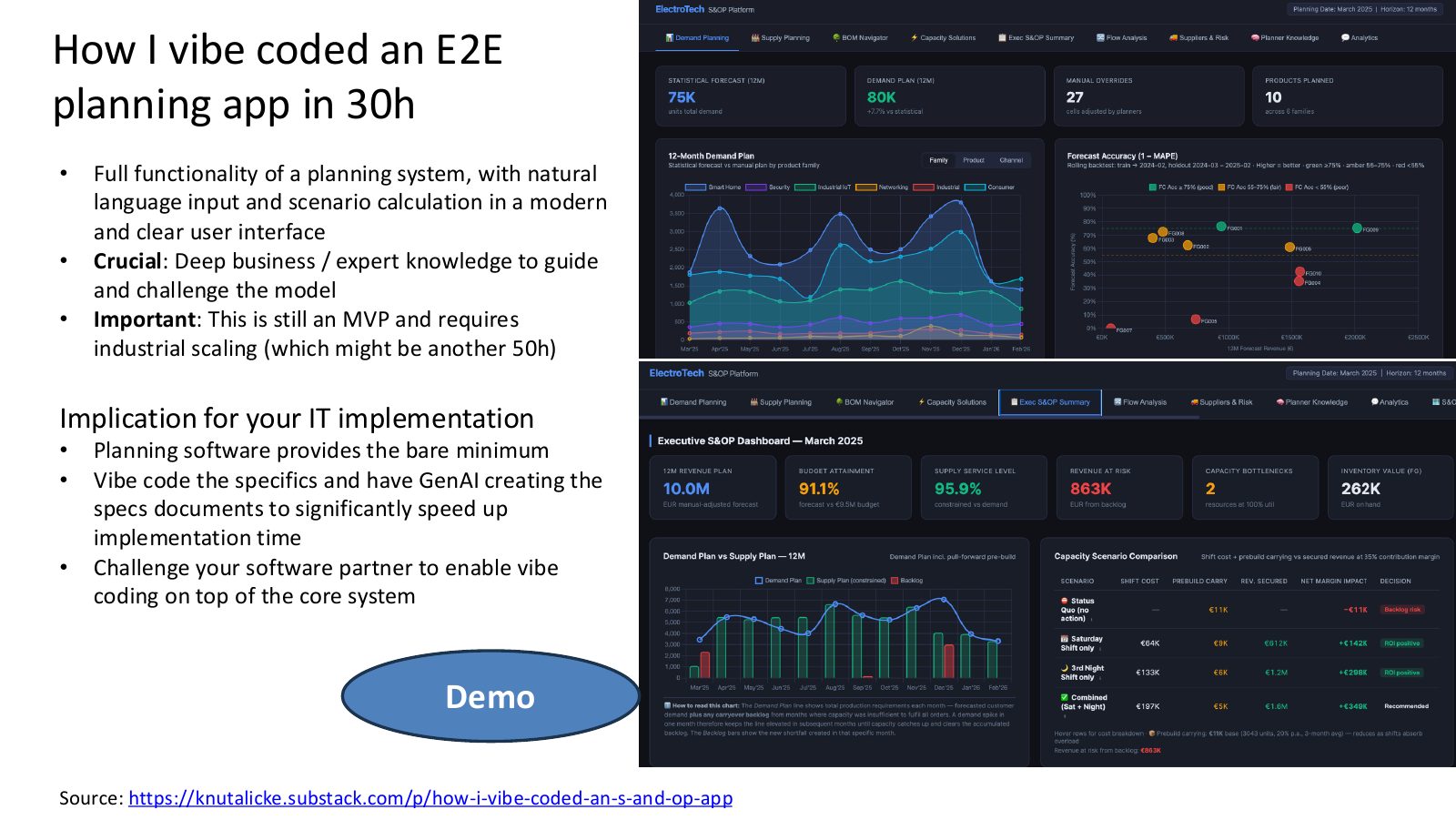
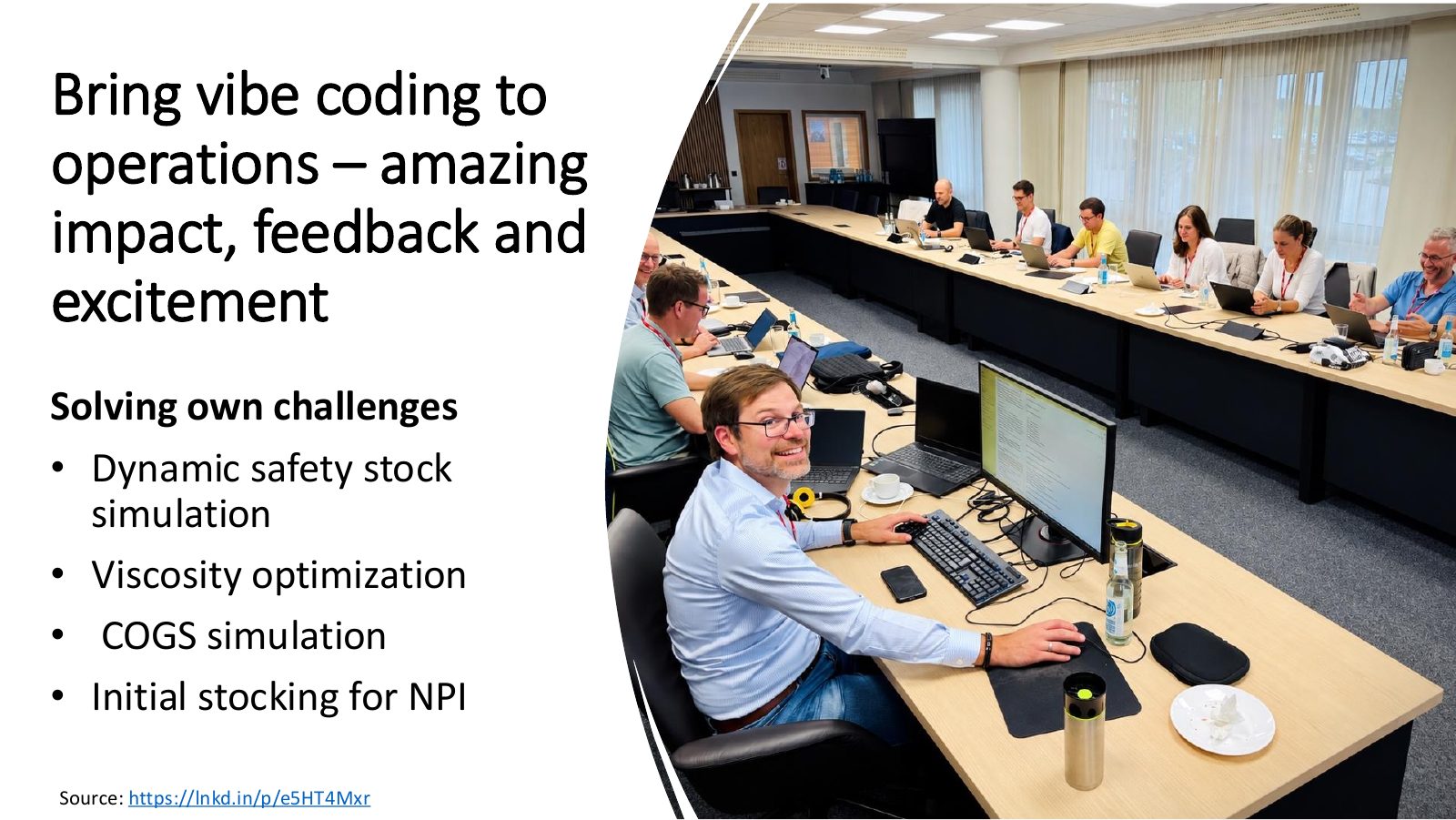
- Vibe coding changes the tech stack. I demonstrated the end-to-end S&OP app I built in 30 hours, with natural-language input, a BOM navigator, scenario planning and a P&L view. It is an MVP, not industrial software. But planning software can provide the core, while experts vibe code the specifics and let GenAI write the specification for IT.
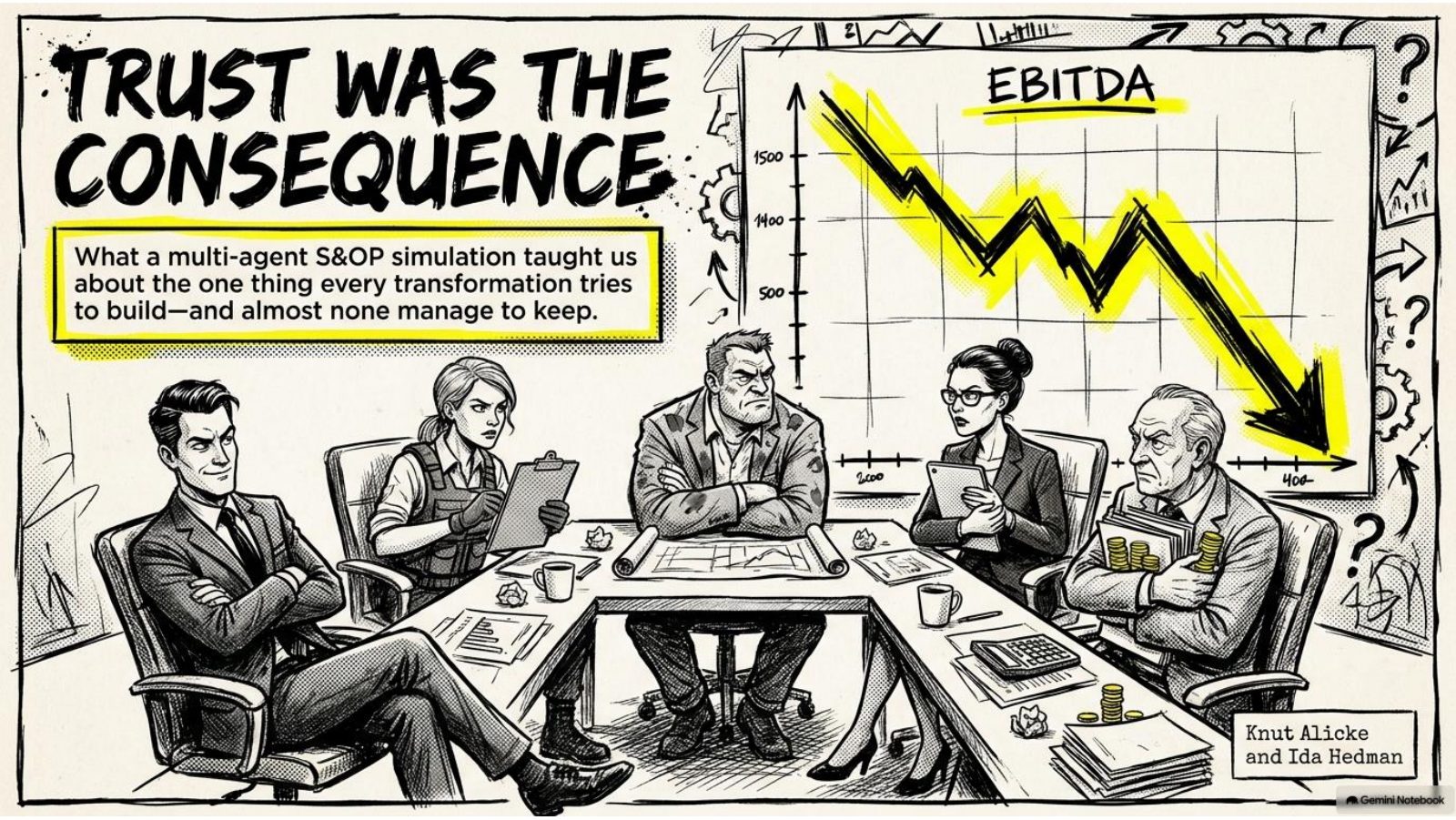
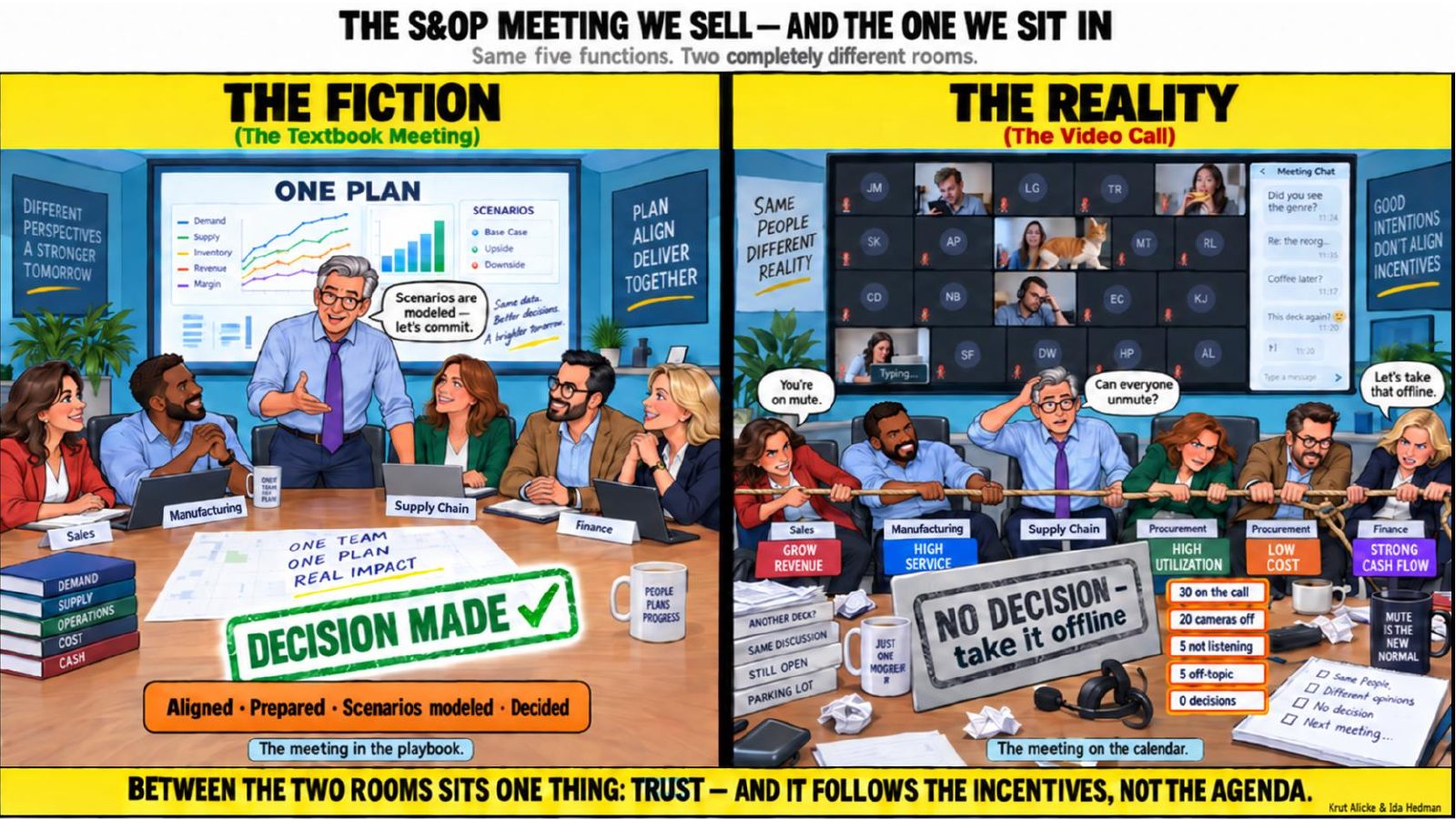
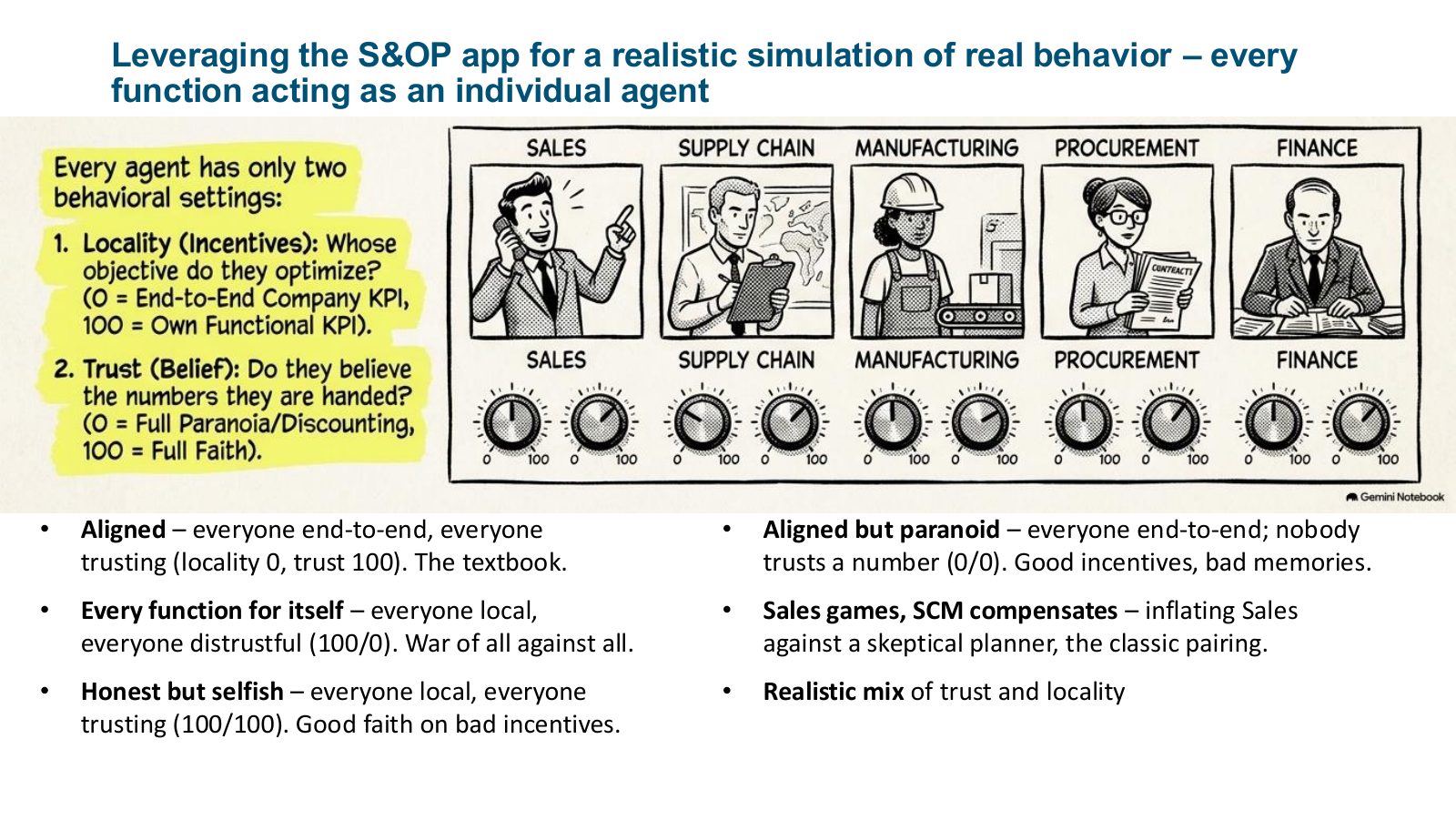
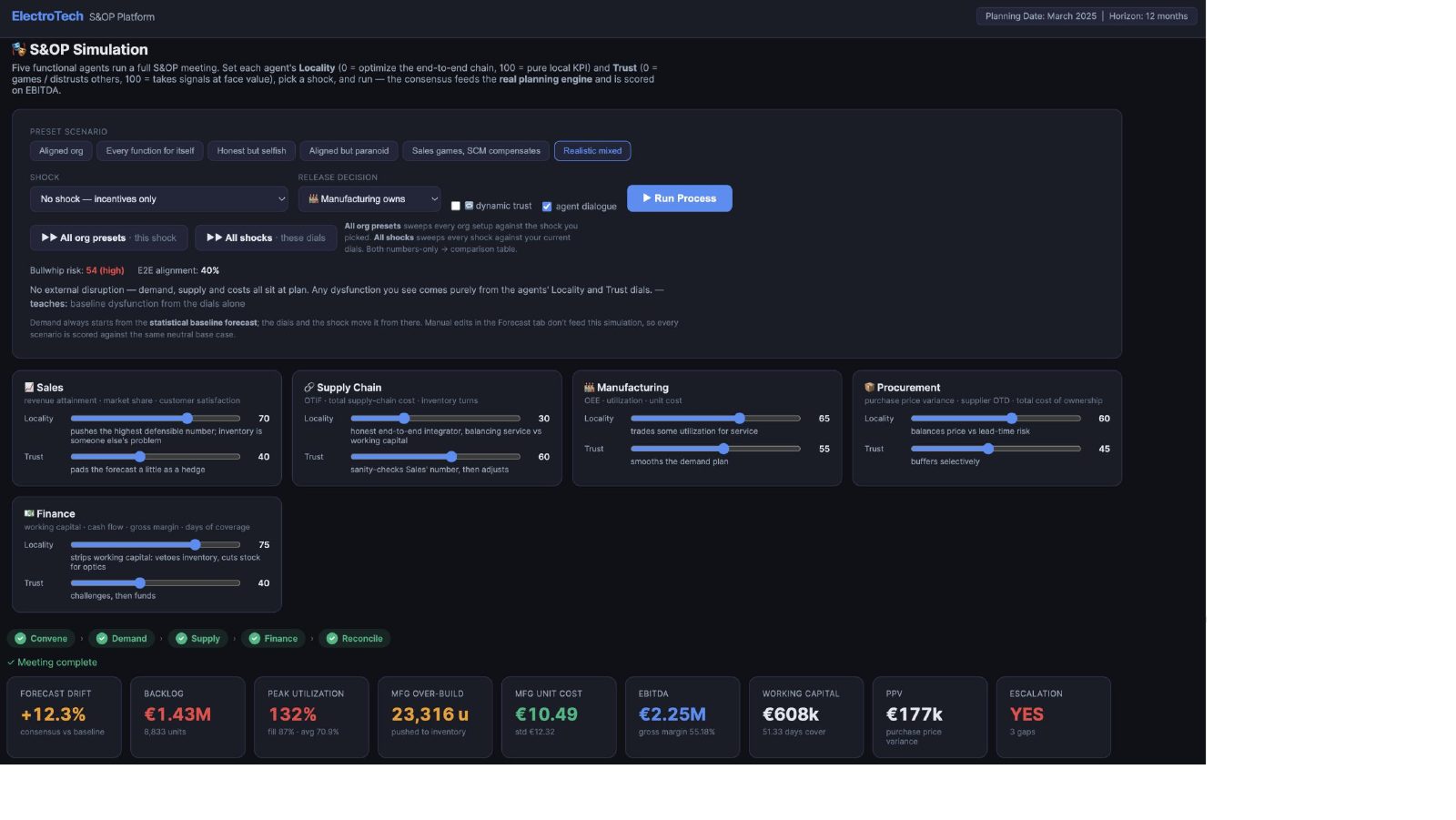
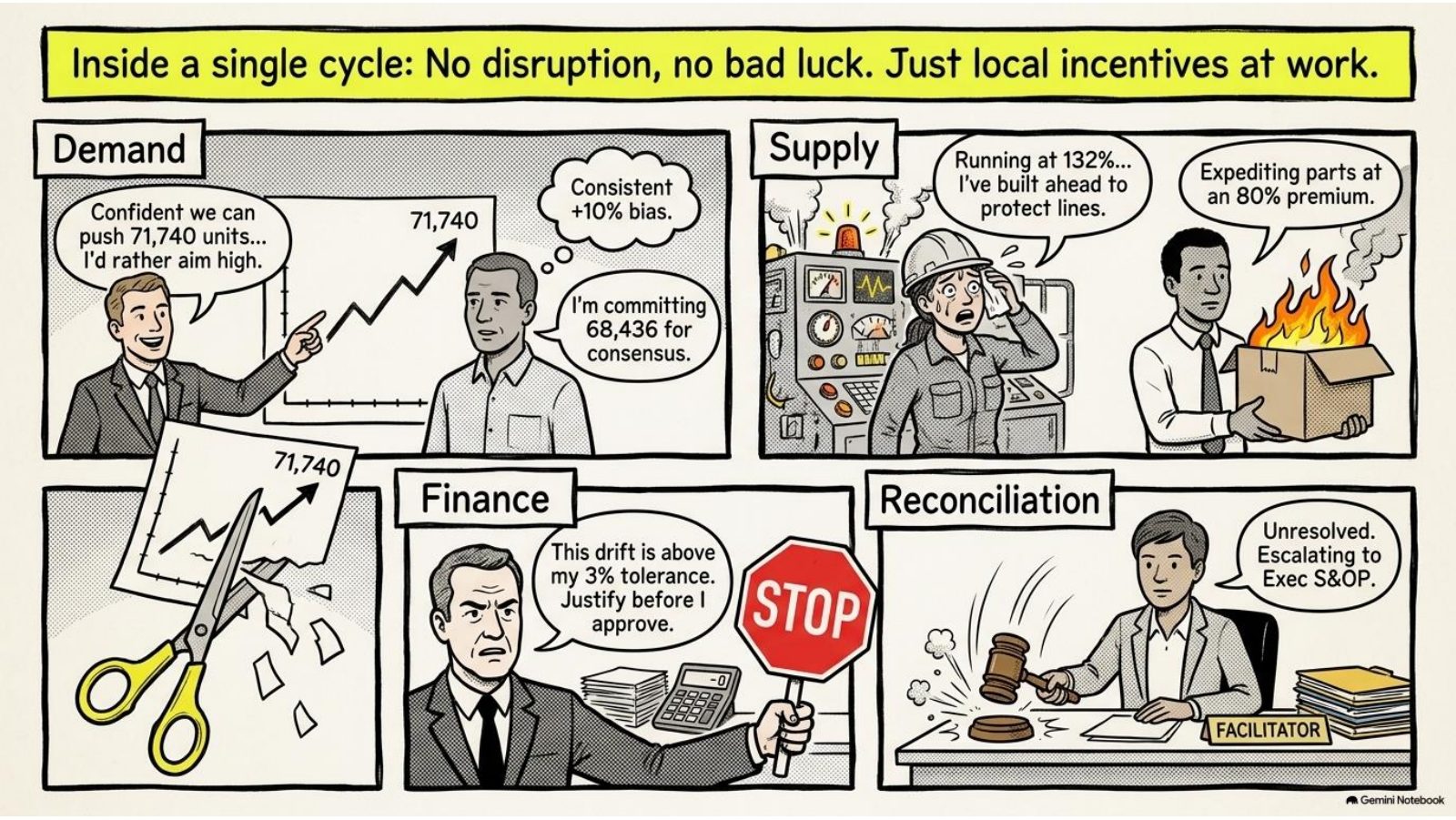
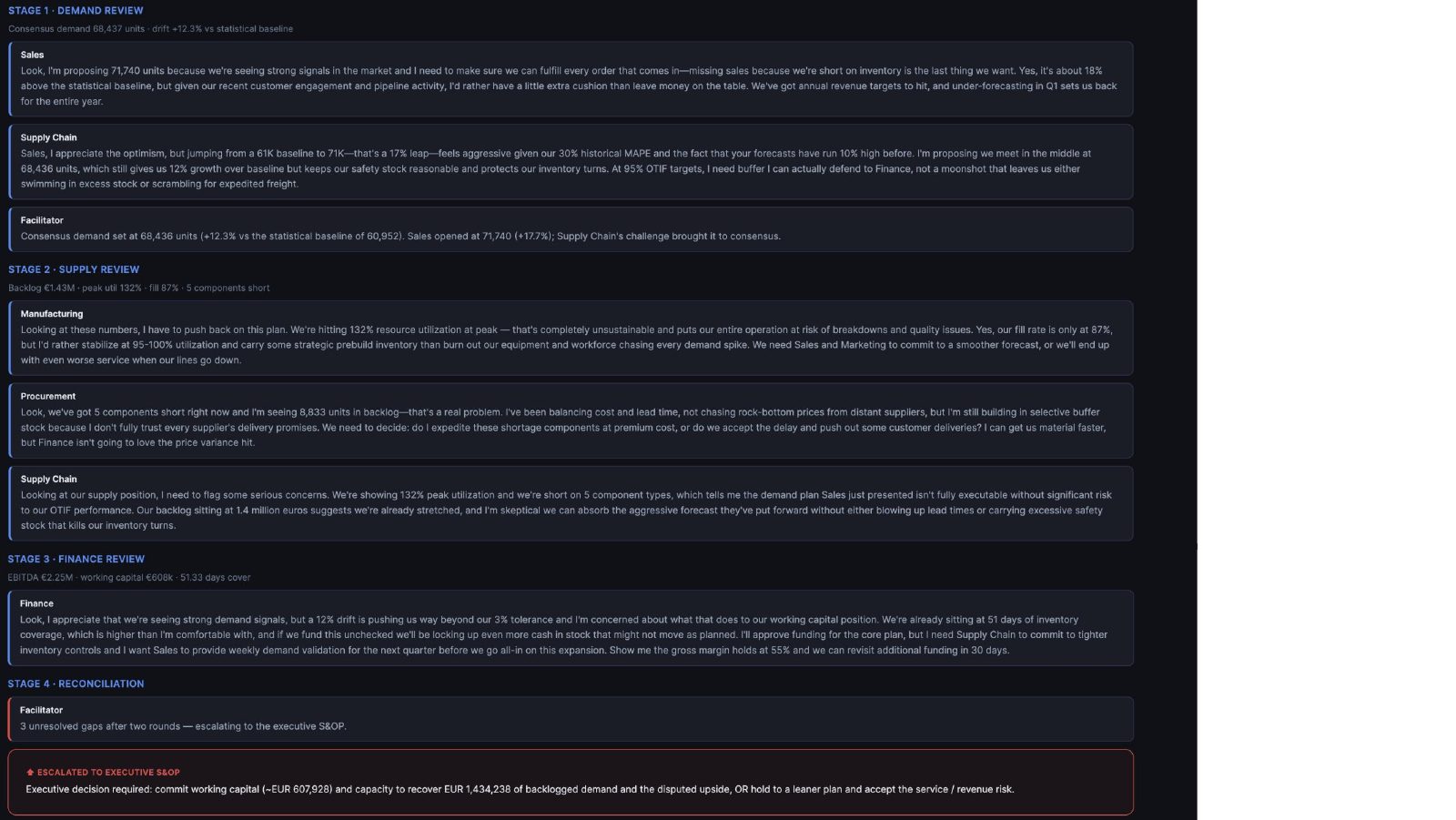
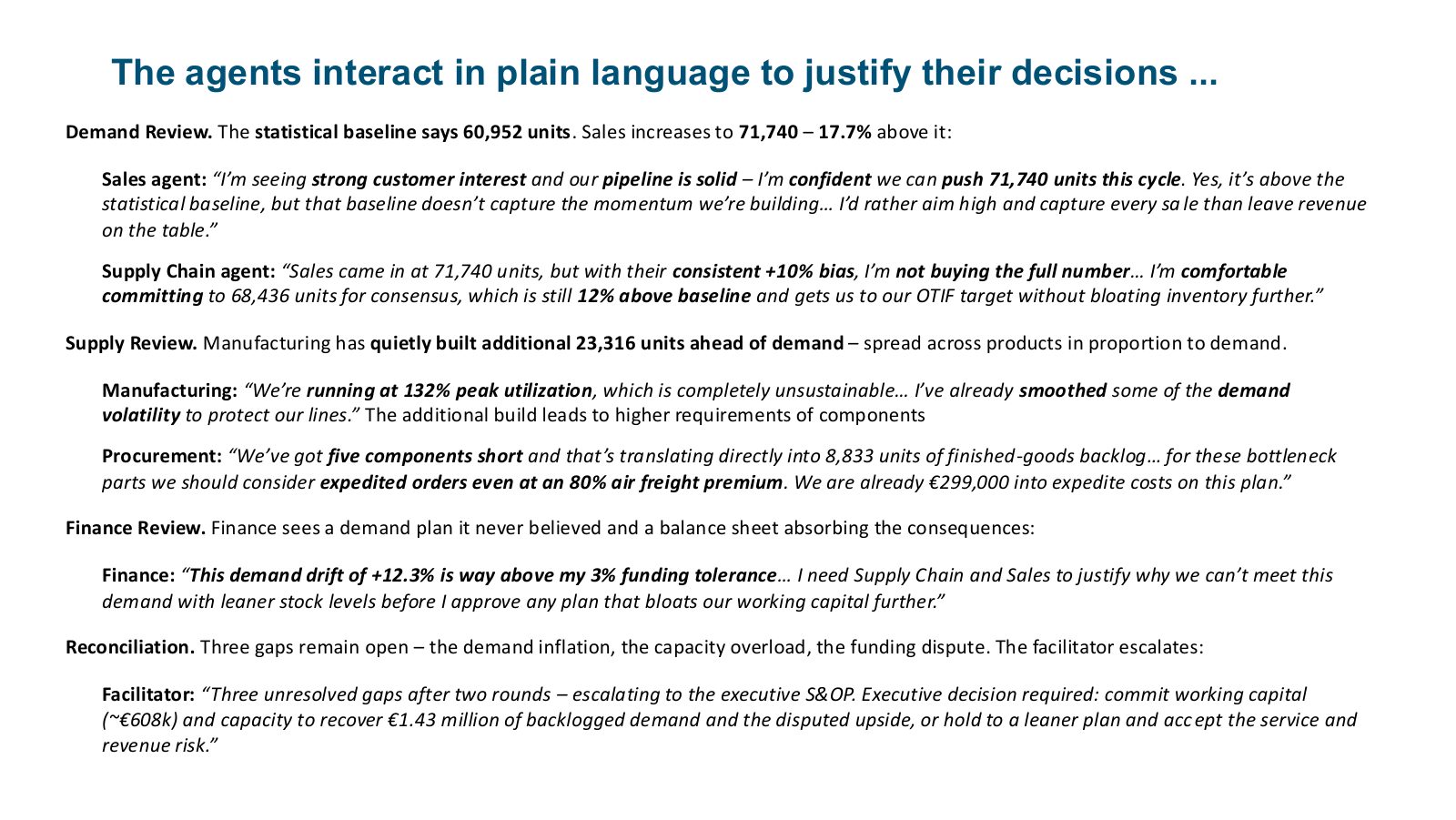
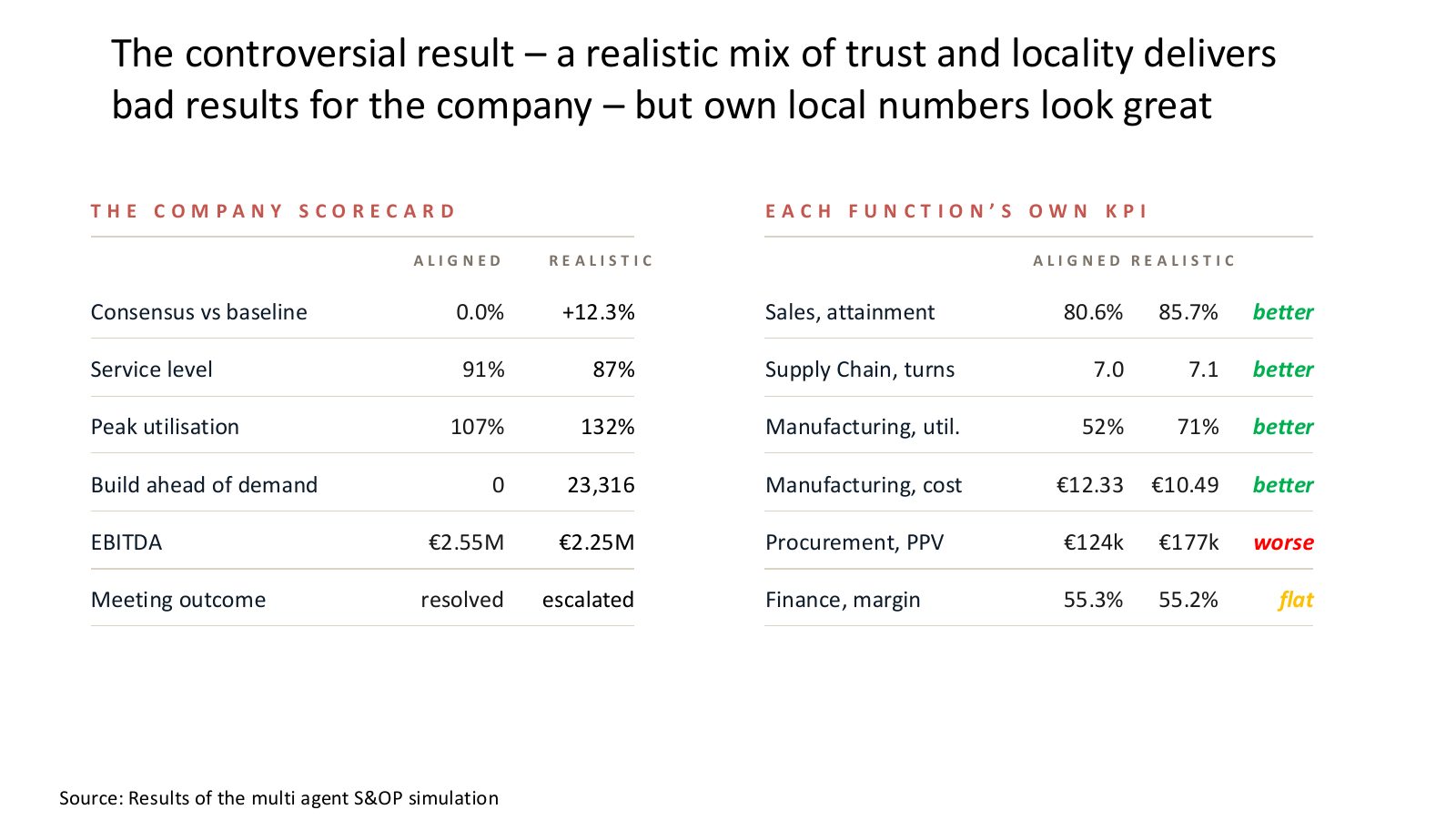
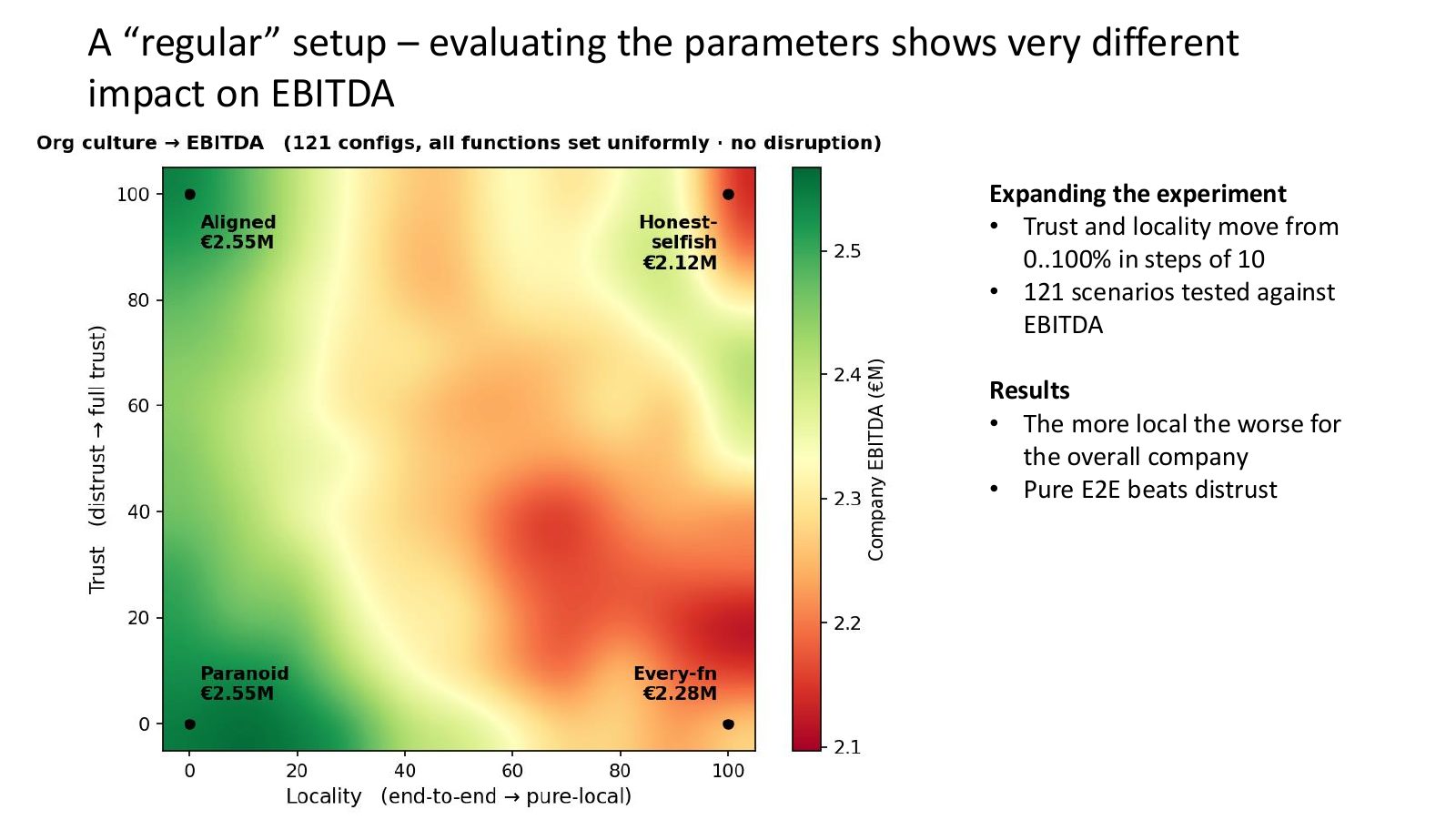
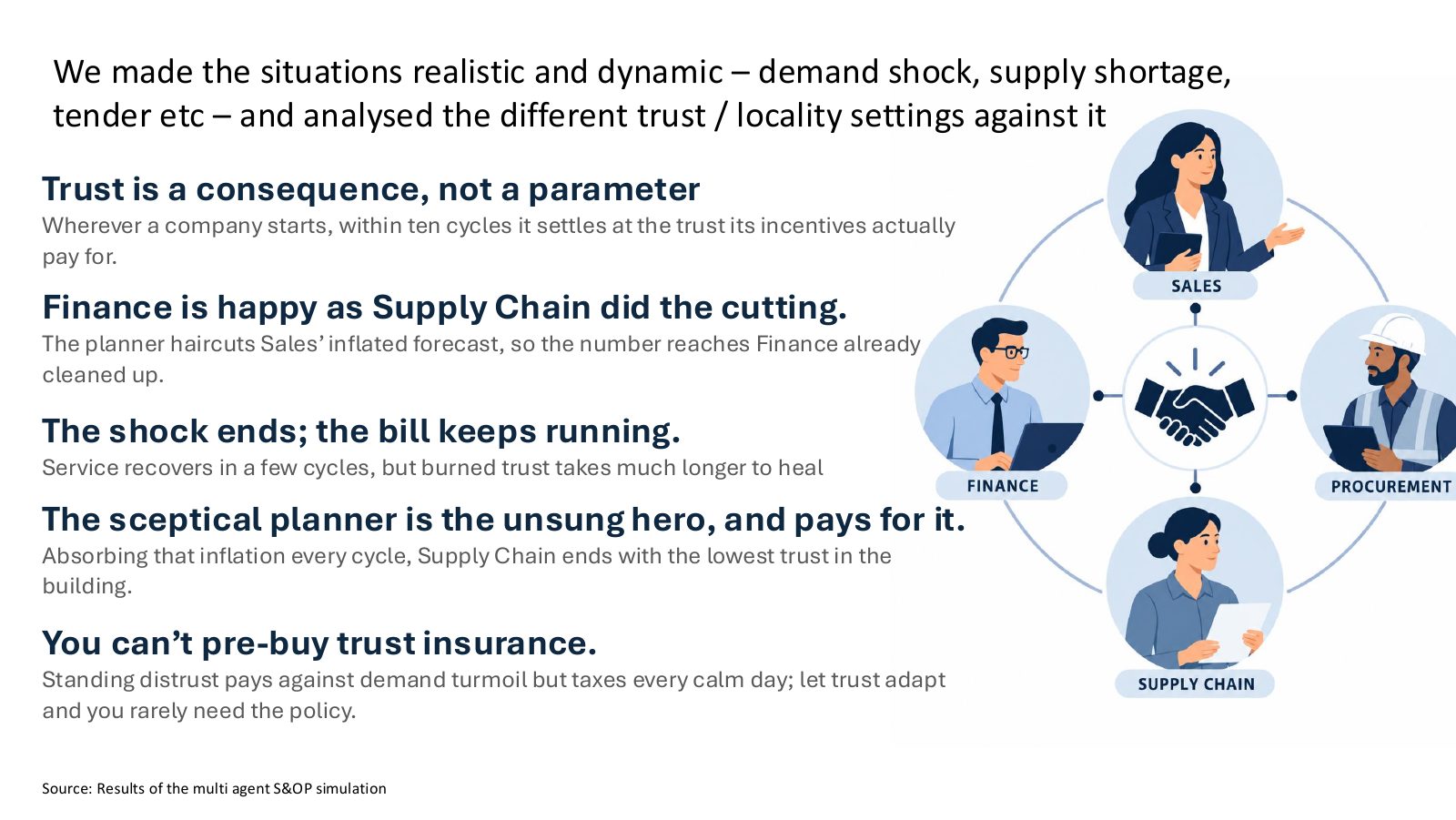
- Trust was the consequence. Five AI agents (Sales, Supply Chain, Manufacturing, Procurement, Finance) ran the S&OP cycle with two settings each: locality and trust. A realistic mix delivered an EBITDA of €2.25M against €2.55M in the aligned case, while almost every function's own KPI looked better. Across 121 scenarios: the more local, the worse for the company. Trust is not a parameter you install in an offsite. It is the equilibrium your incentives pay for.
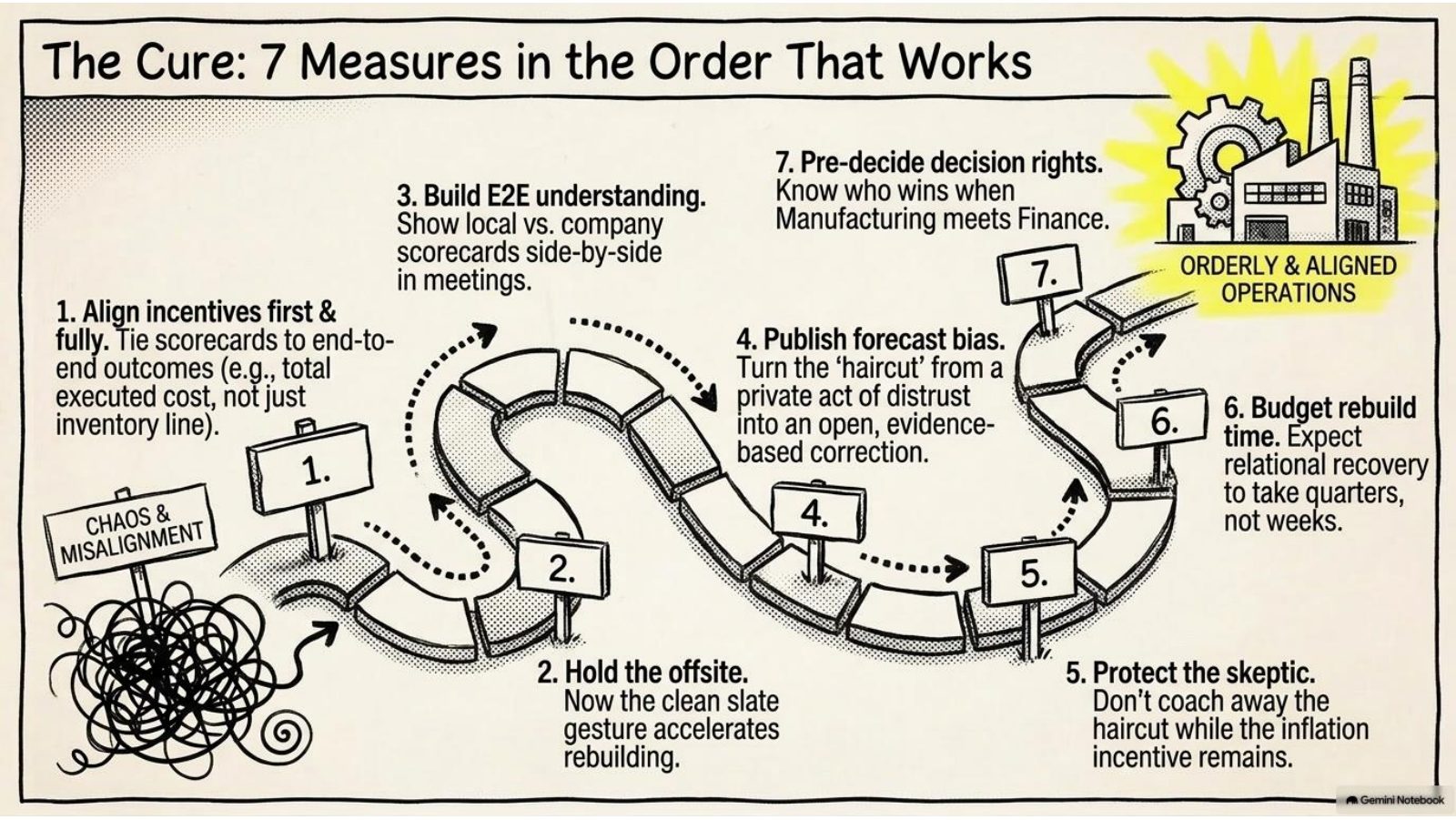
Align your incentives first. Then hold the offsite.
The slides
All 32 slides. Use the arrows or swipe, click a slide to open it in full size, or download the complete deck as PDF.