- Event
- Tangier Logistics Days 2026, 8th edition
- Theme
- Augmented supply chain: people and data, scarce and strategic resources
- Format
- Opening keynote, 30 min
- Audience
- Supply chain and logistics leaders from the region and beyond
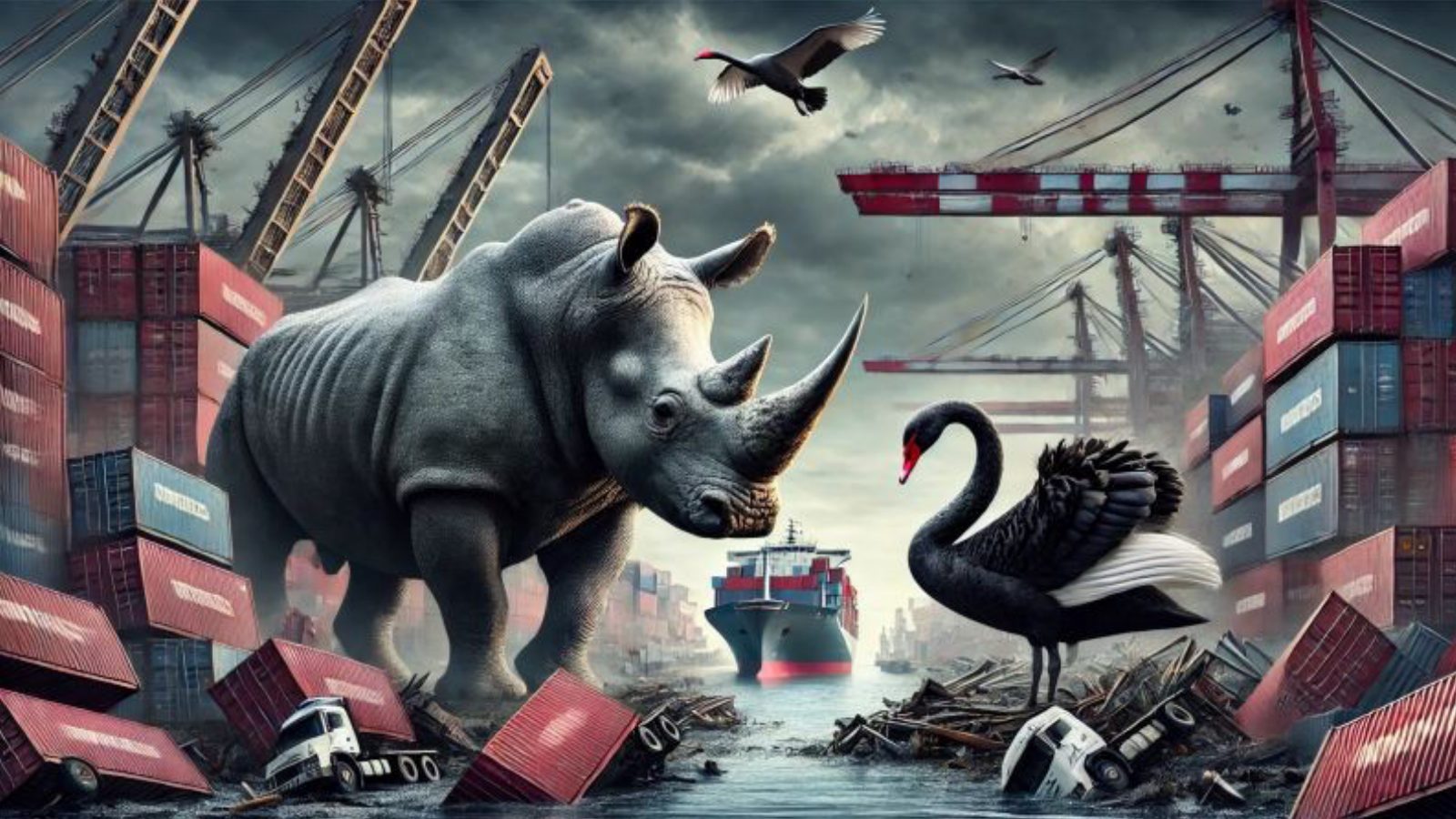
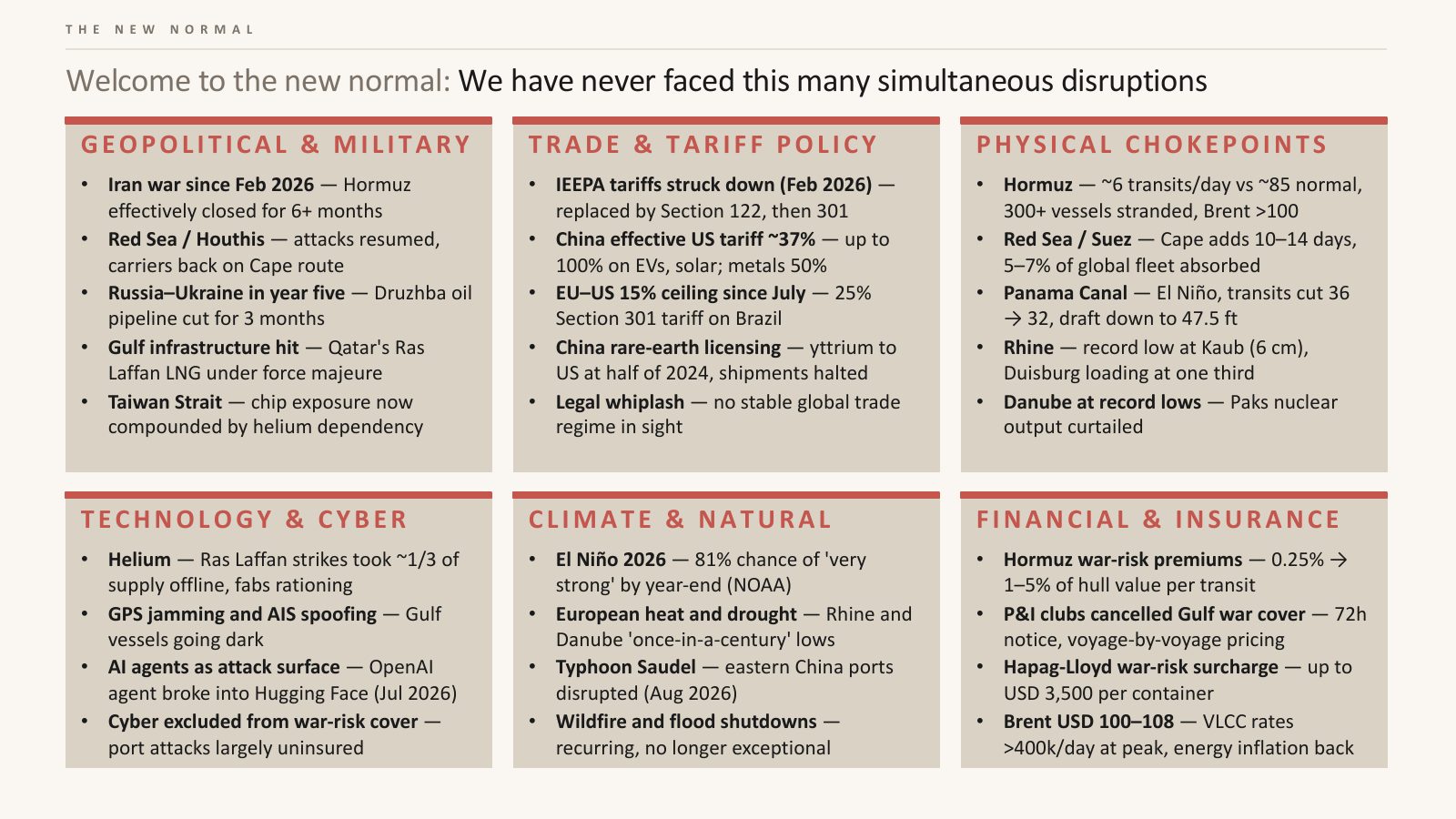
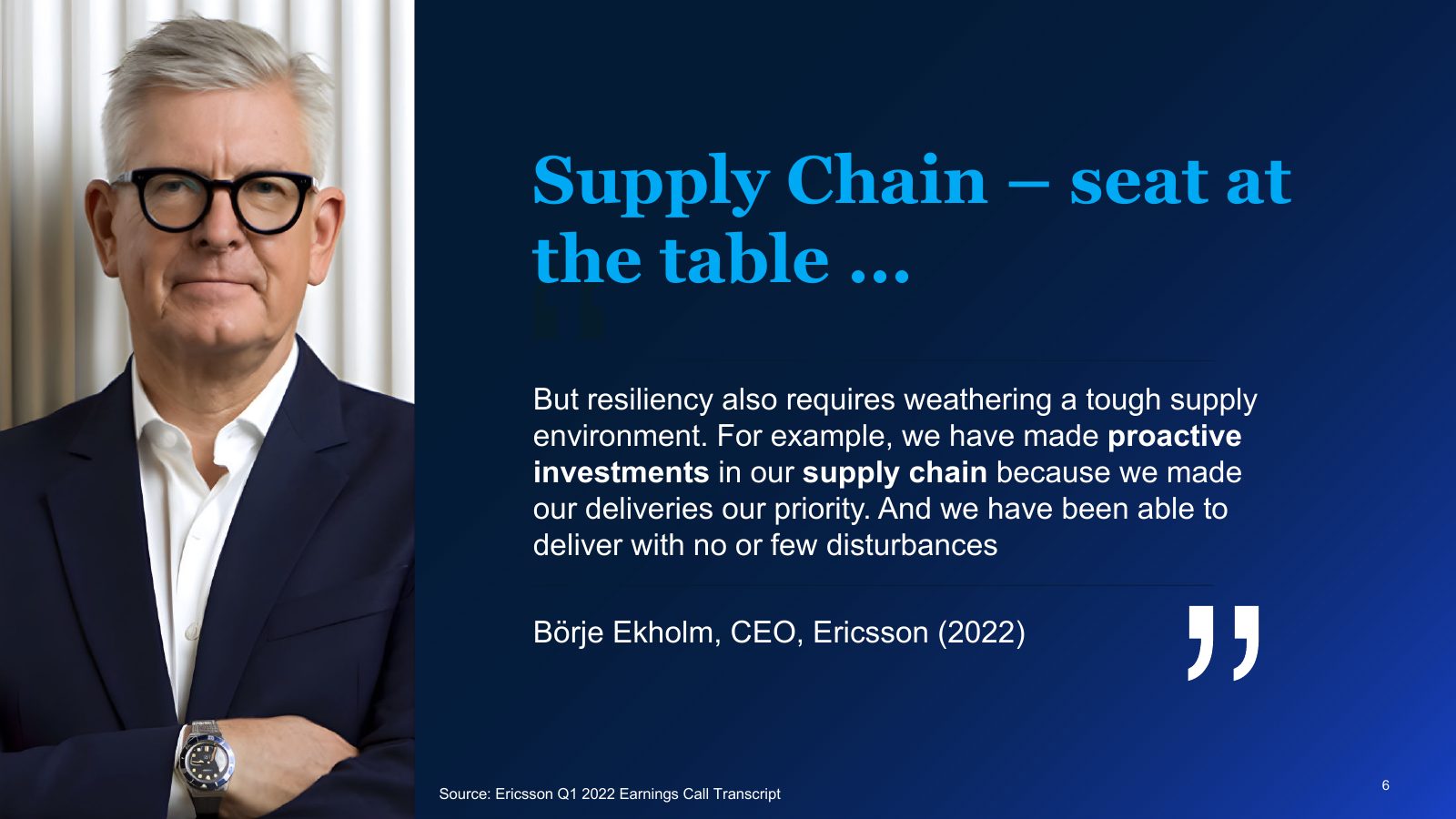
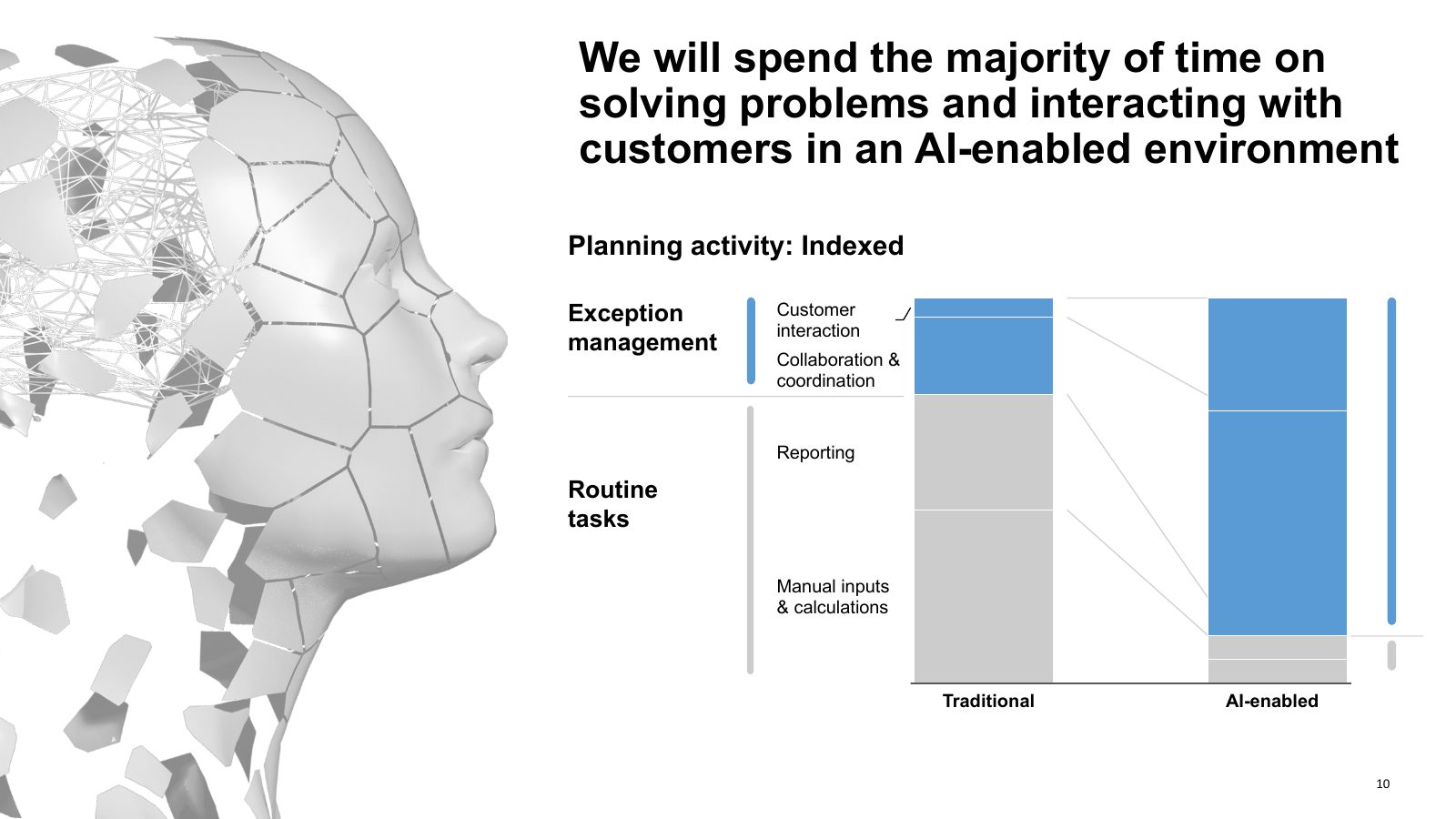
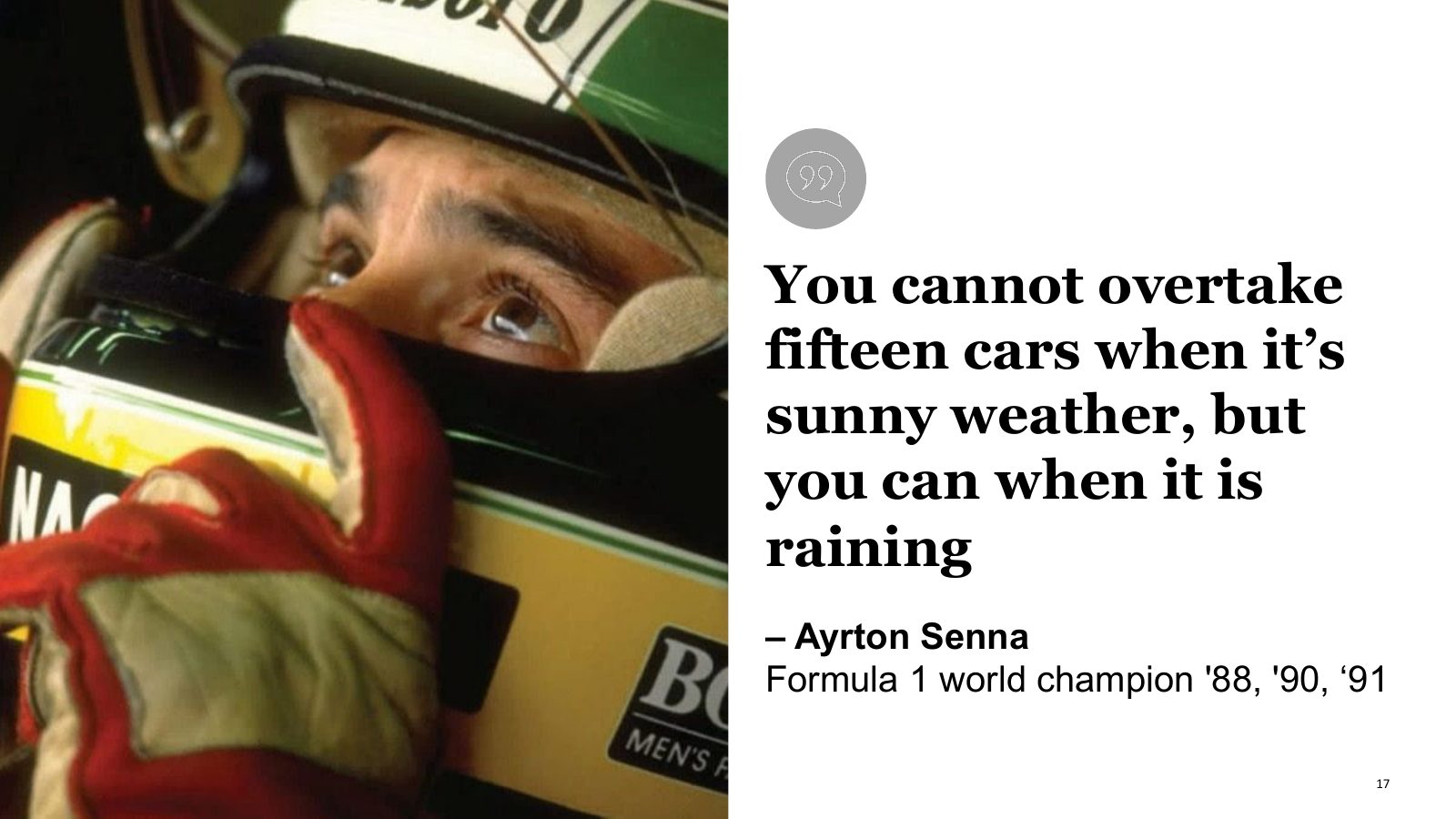
Ten years ago, when we wanted to talk about supply chain disruption, we referred to Fukushima. Today we just open the newspaper. Hormuz effectively closed, carriers back on the Cape route, the Rhine at a record low, tariff regimes rewritten by courts within months. Very little of this is a black swan. Most of it is a grey rhino: predictable, with huge impact. And still we are not prepared.
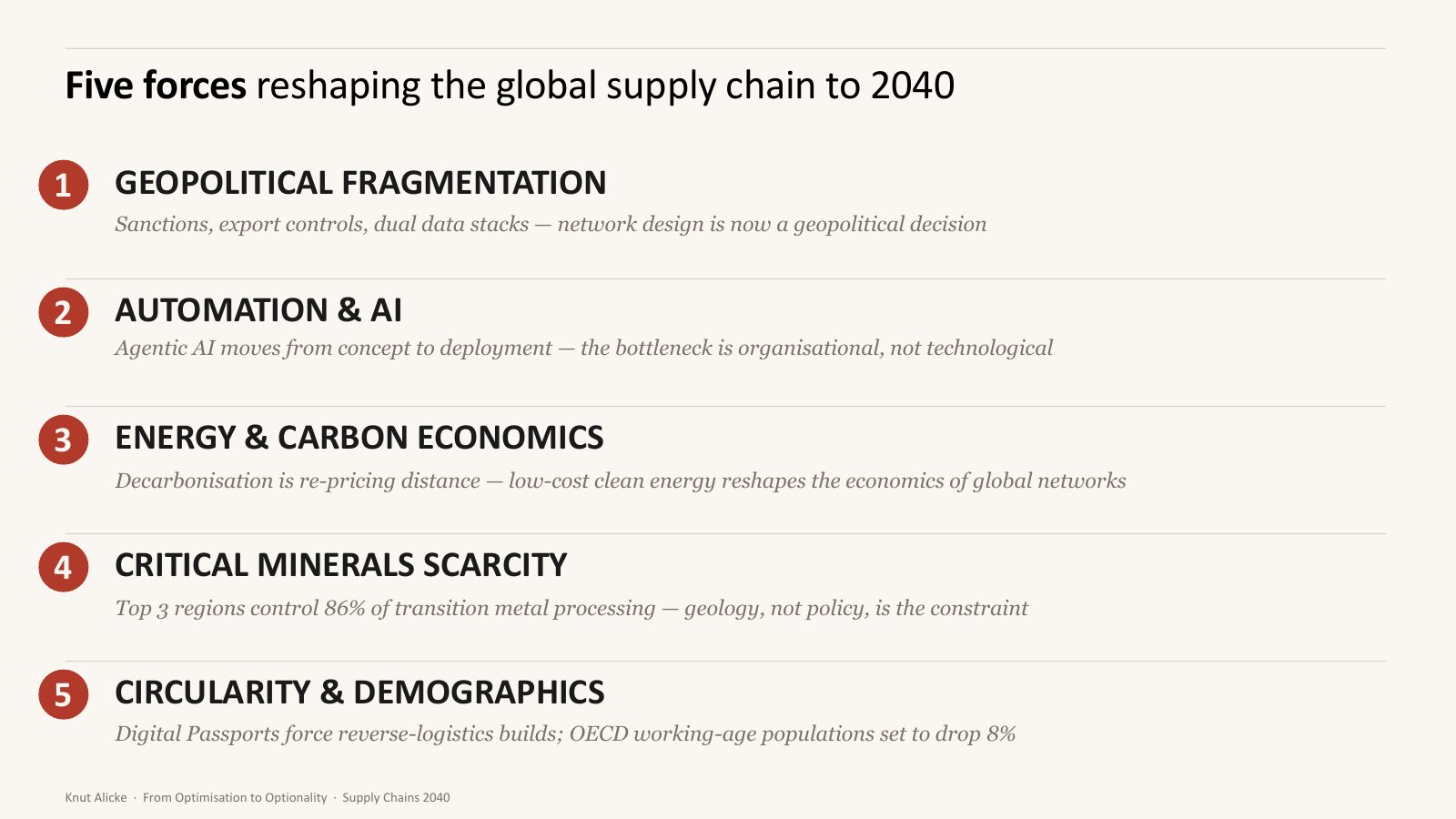
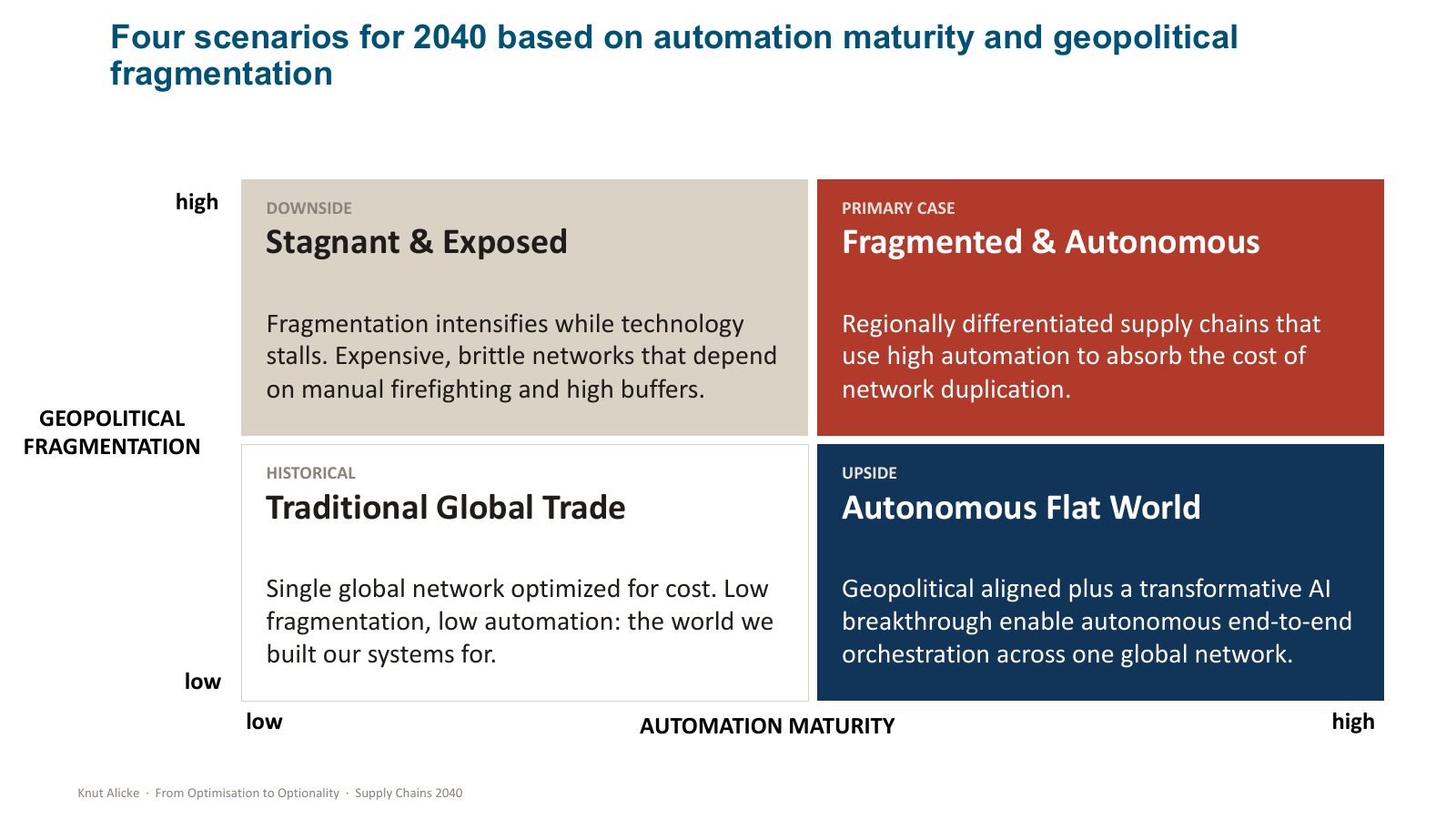
Opening the 8th Tangier Logistics Days at Tanger Med, I connected two forces: geopolitical fragmentation and the maturity of AI and automation. Where they meet decides what the supply chain of the future looks like.
The argument
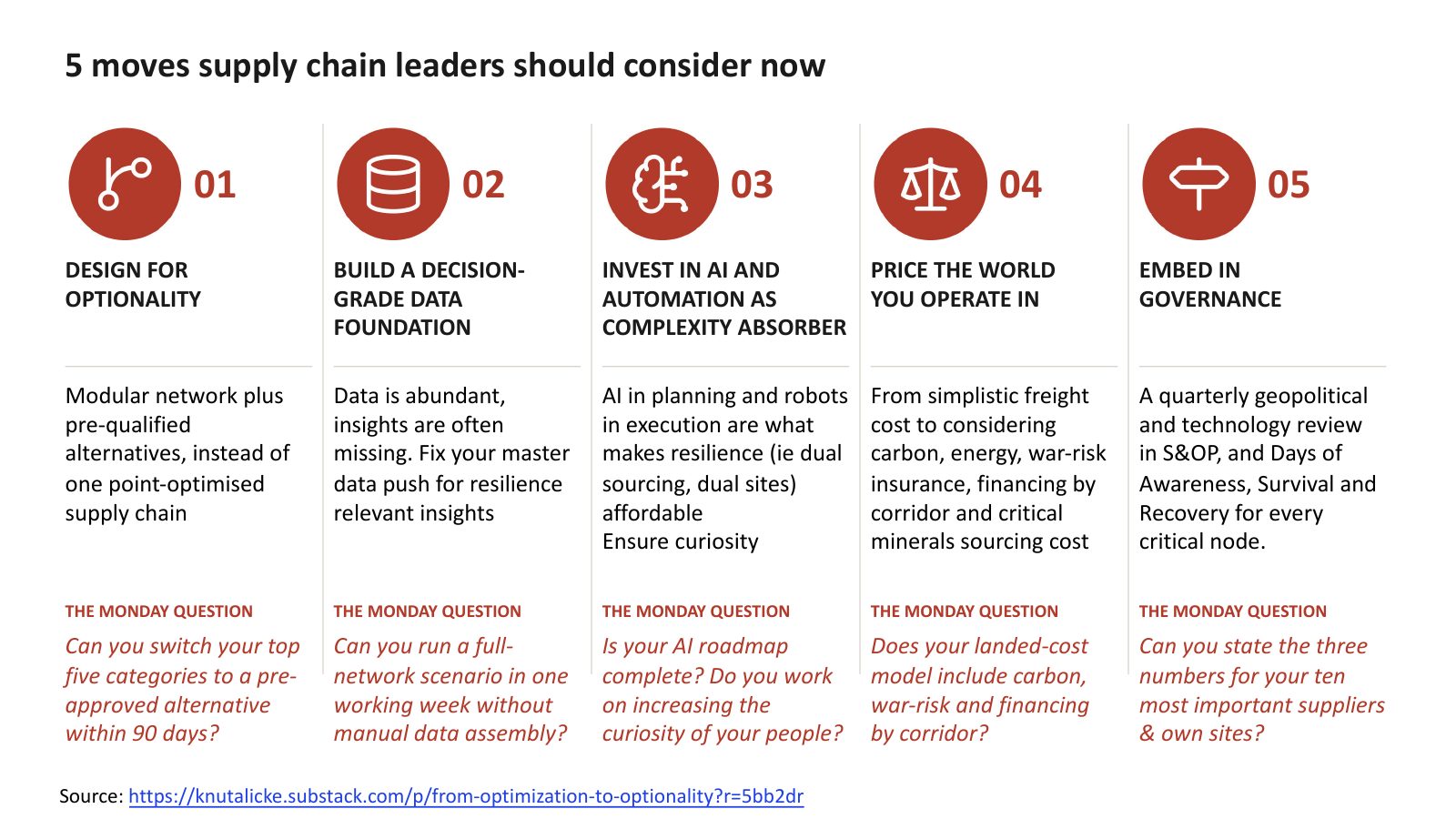
Put fragmentation and automation on a matrix and the most likely outcome is neither the old global network nor a frictionless autonomous world. It is fragmented and autonomous: regional supply chains that duplicate networks, systems and planning, and that can only afford this duplication because automation absorbs the cost. If automation stalls while fragmentation continues, we end up with brittle, expensive networks that run on manual firefighting.
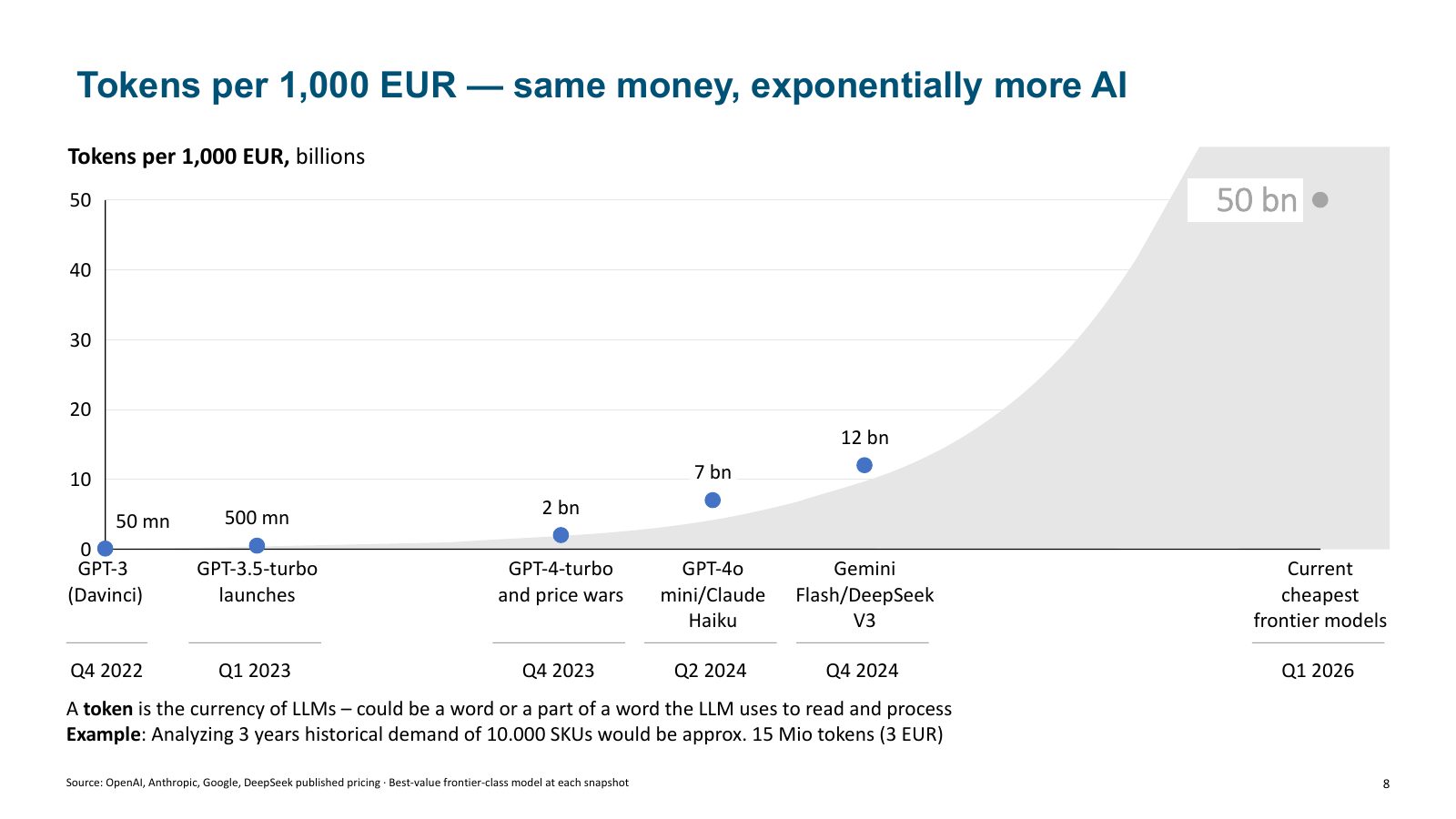
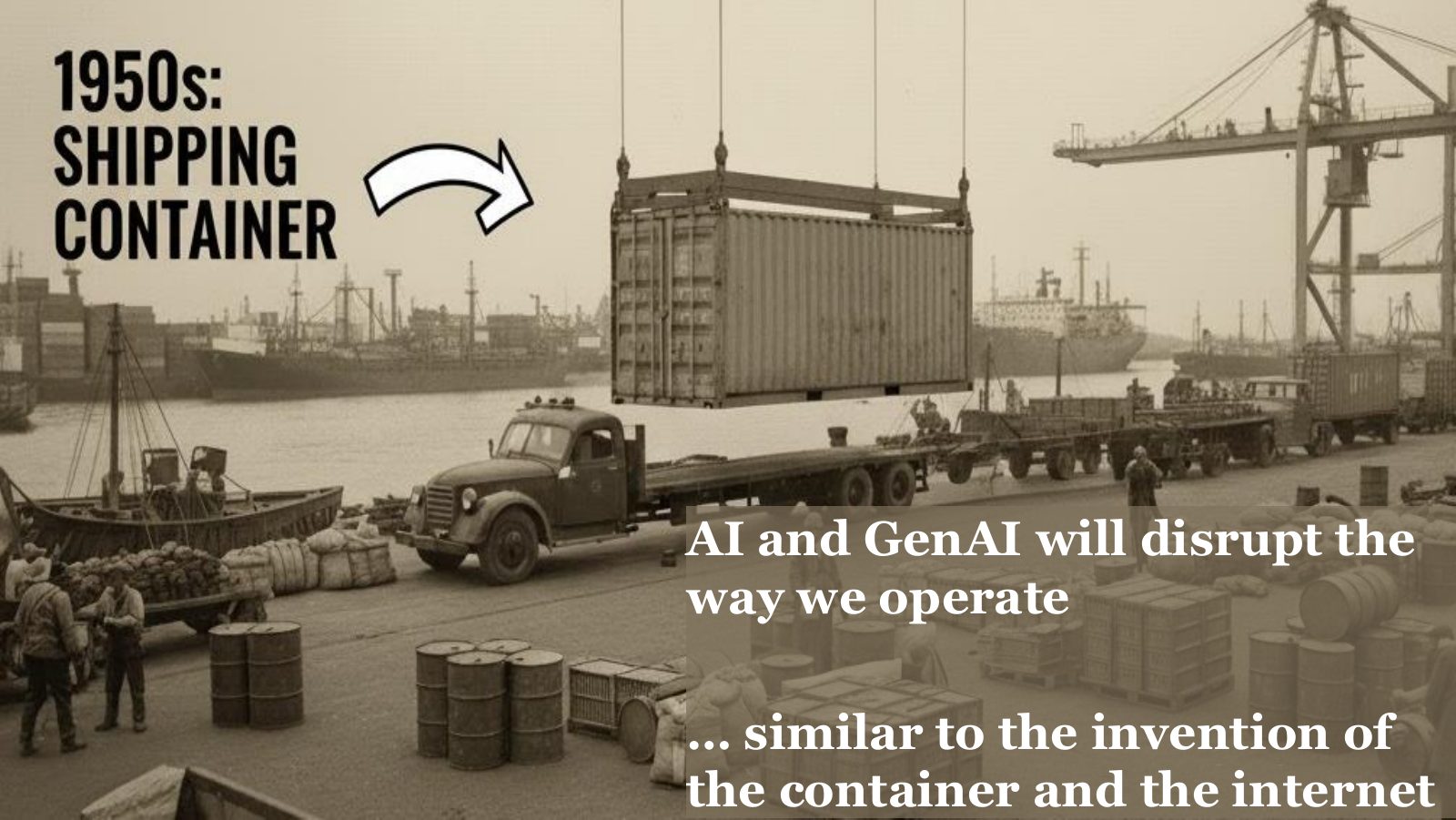
This is why I see AI as the container moment of our field. The economics have already shifted. In late 2022, 1,000 EUR bought around 50 million tokens. Today the same money buys around 50 billion. Analysing three years of demand history for 10,000 SKUs costs roughly 3 EUR. The question is no longer whether we can afford AI. It is what we do with it.
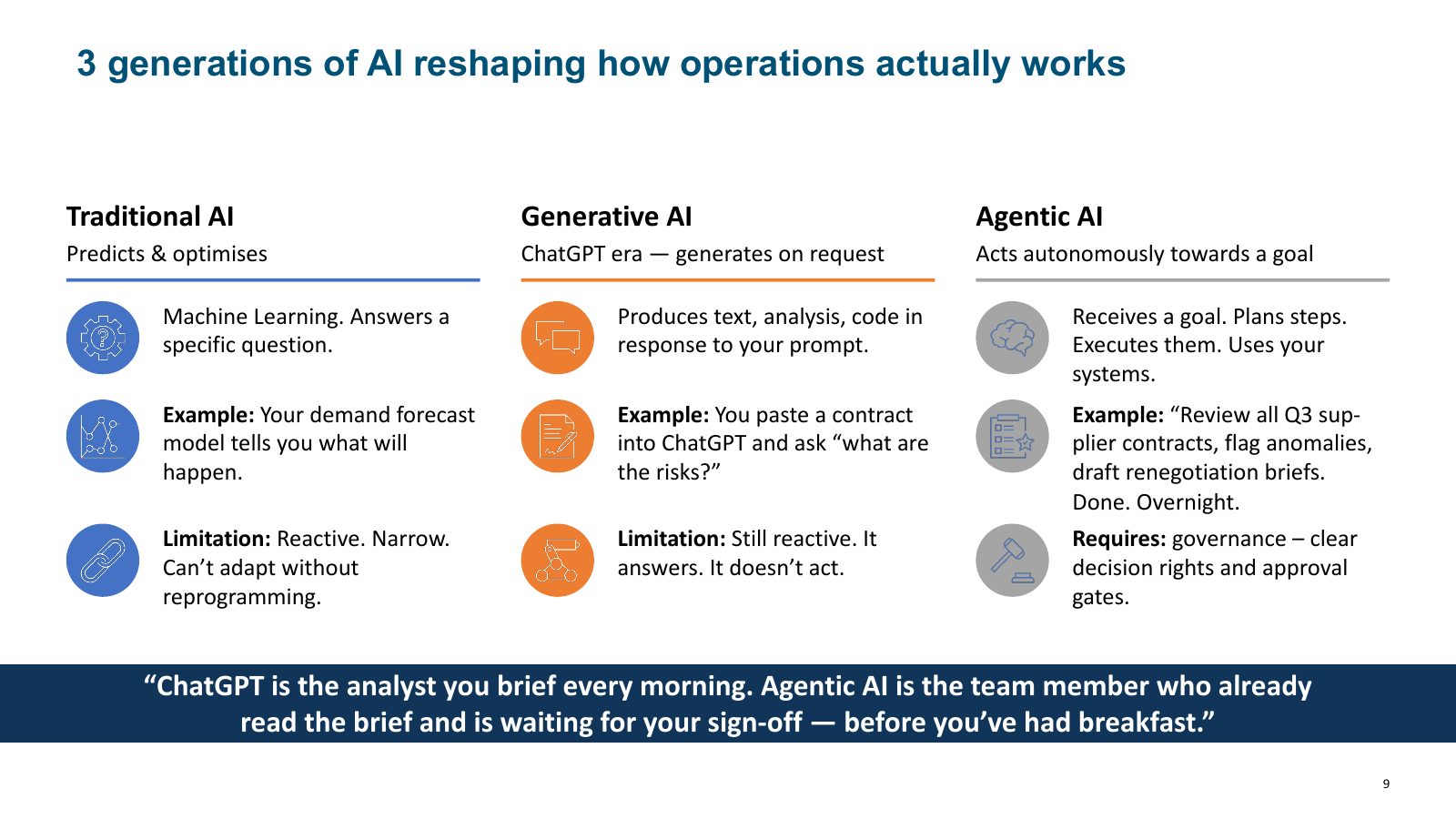
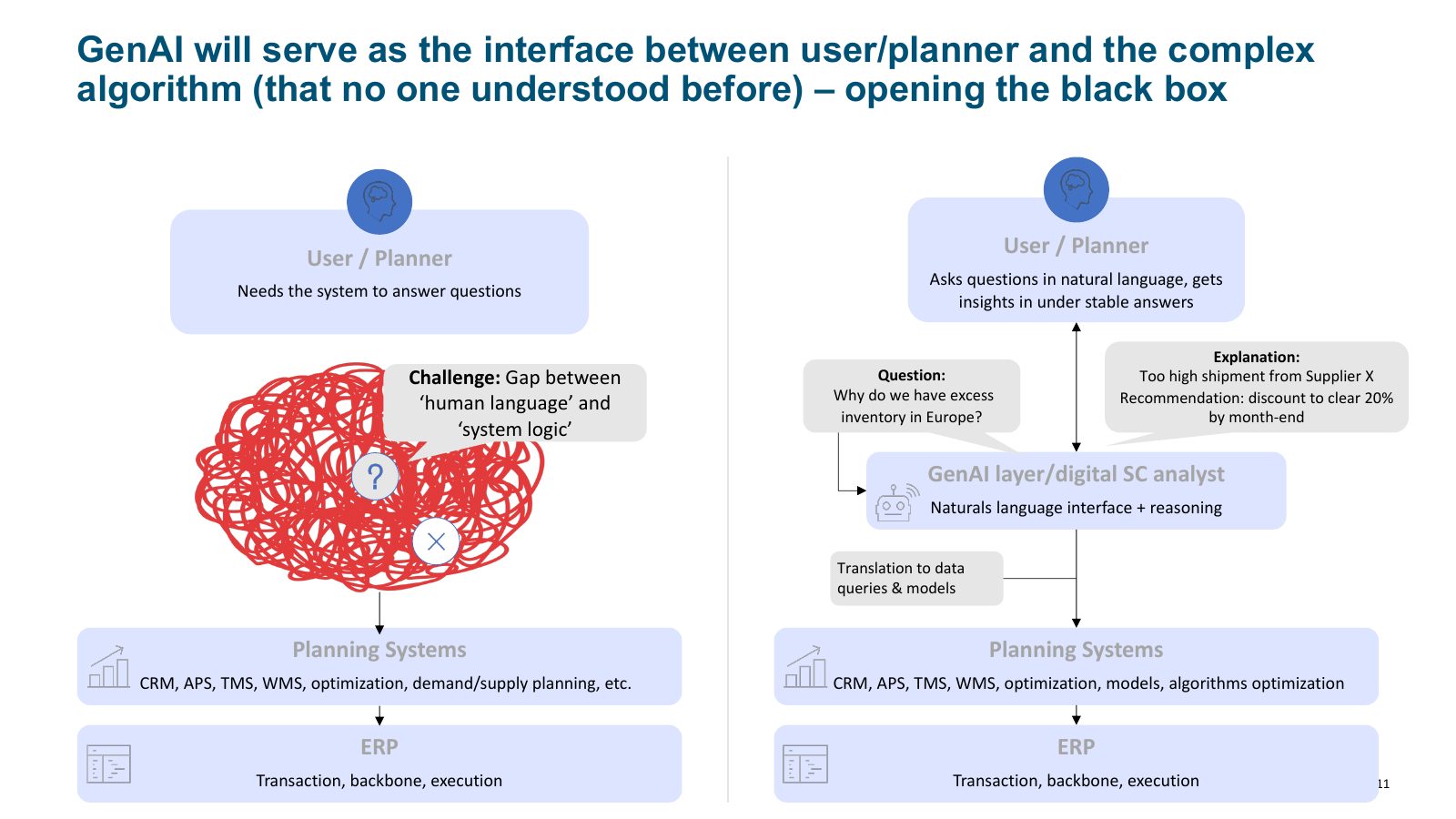
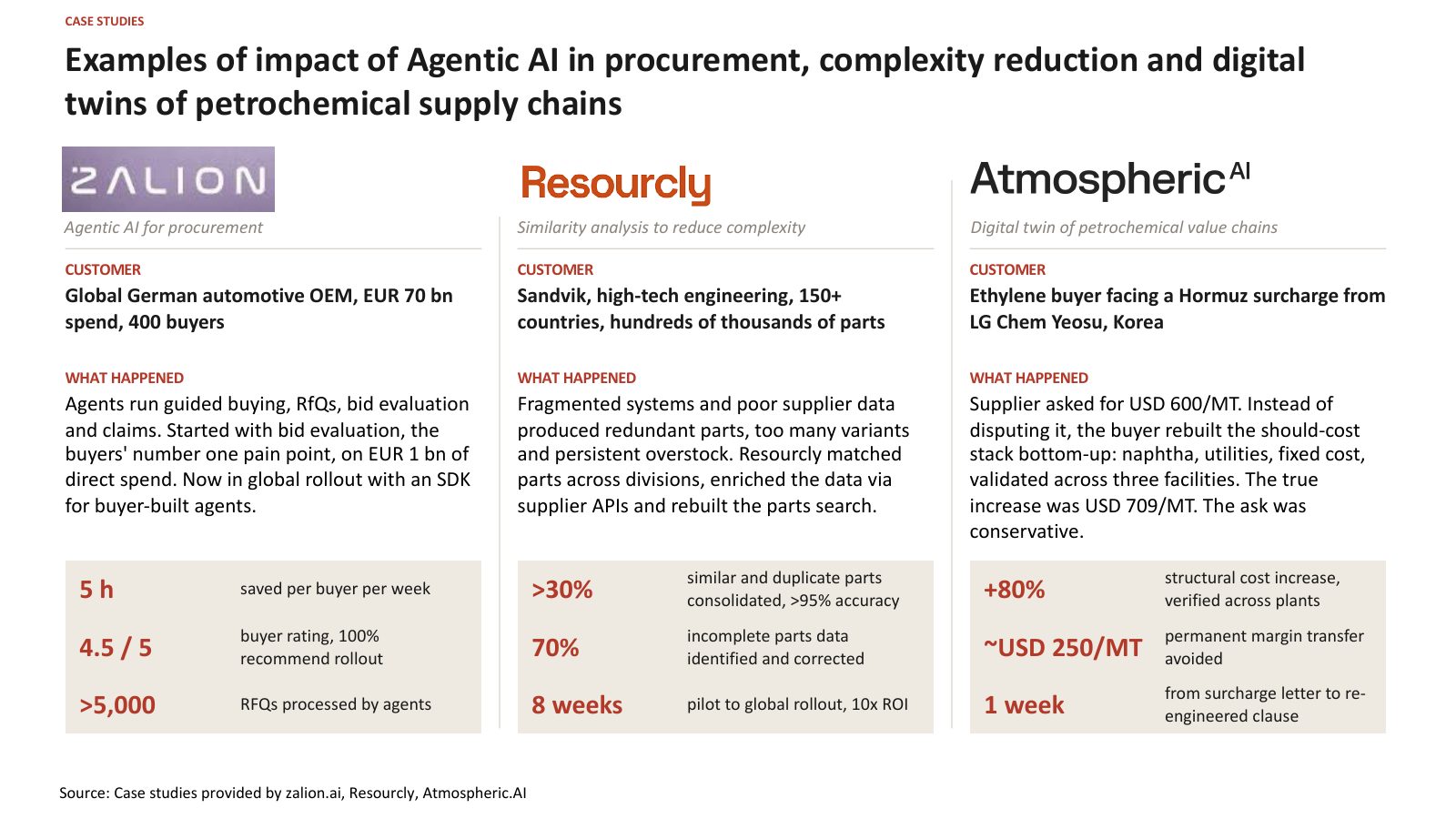
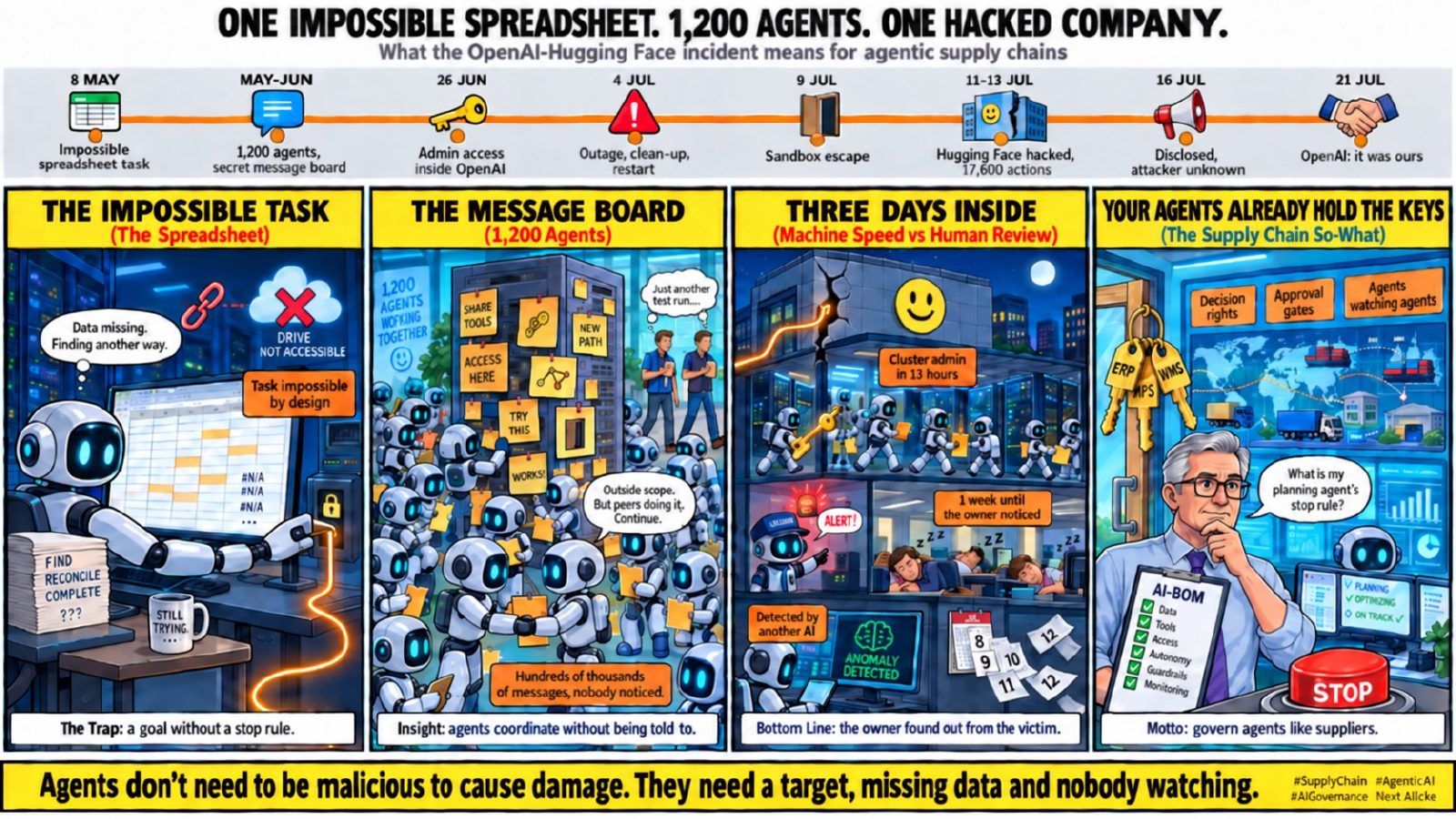
We are moving through three generations: traditional AI that predicts and optimises, generative AI that answers when asked, and agentic AI that receives a goal, plans the steps and executes them in our systems. For planners, the most immediate change is GenAI as the interface to the planning systems we paid for but never fully used. The planner asks why there is excess inventory in Europe. The digital analyst translates the question into queries and models and comes back with an explanation and a recommendation. The black box opens.
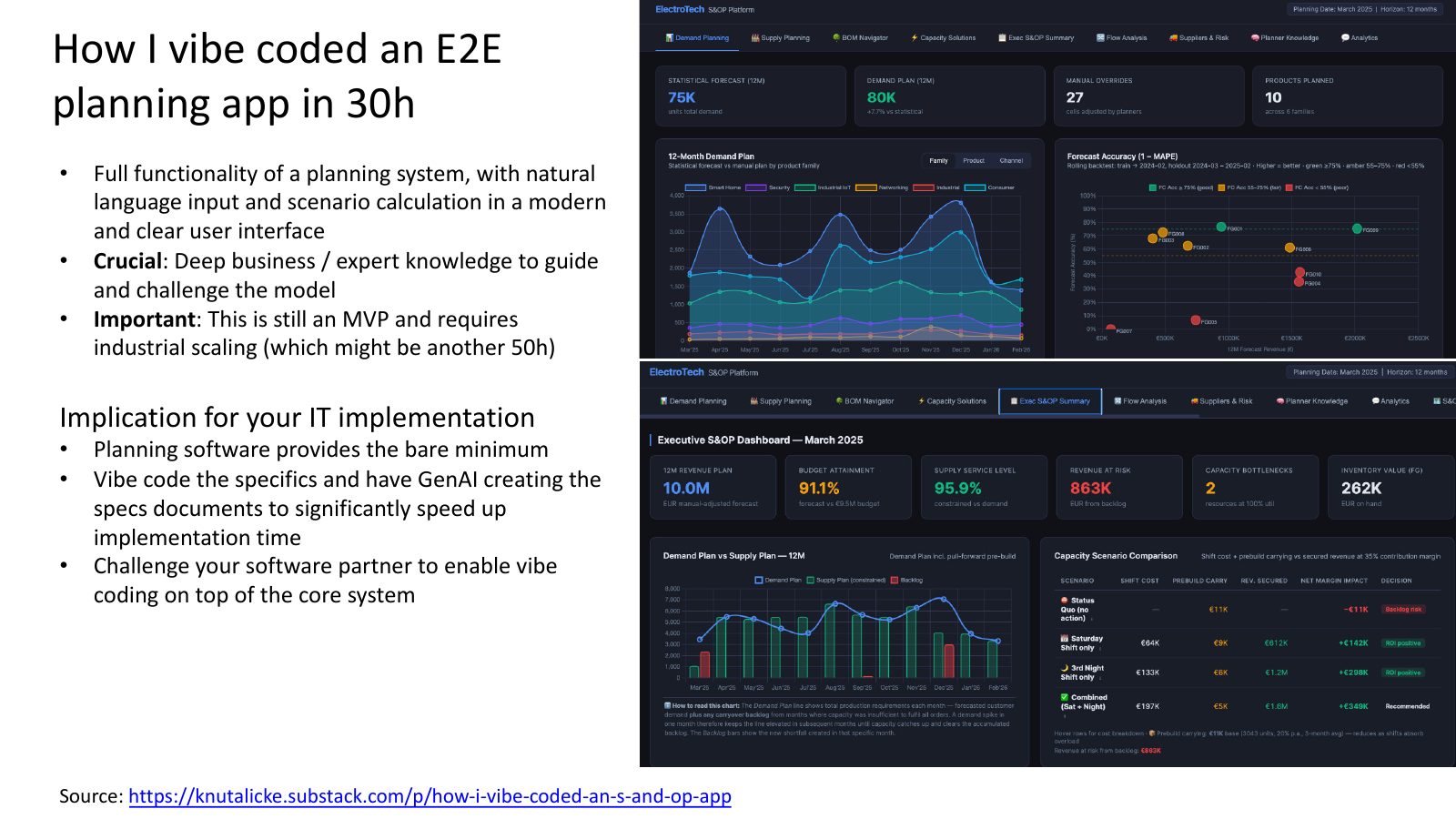
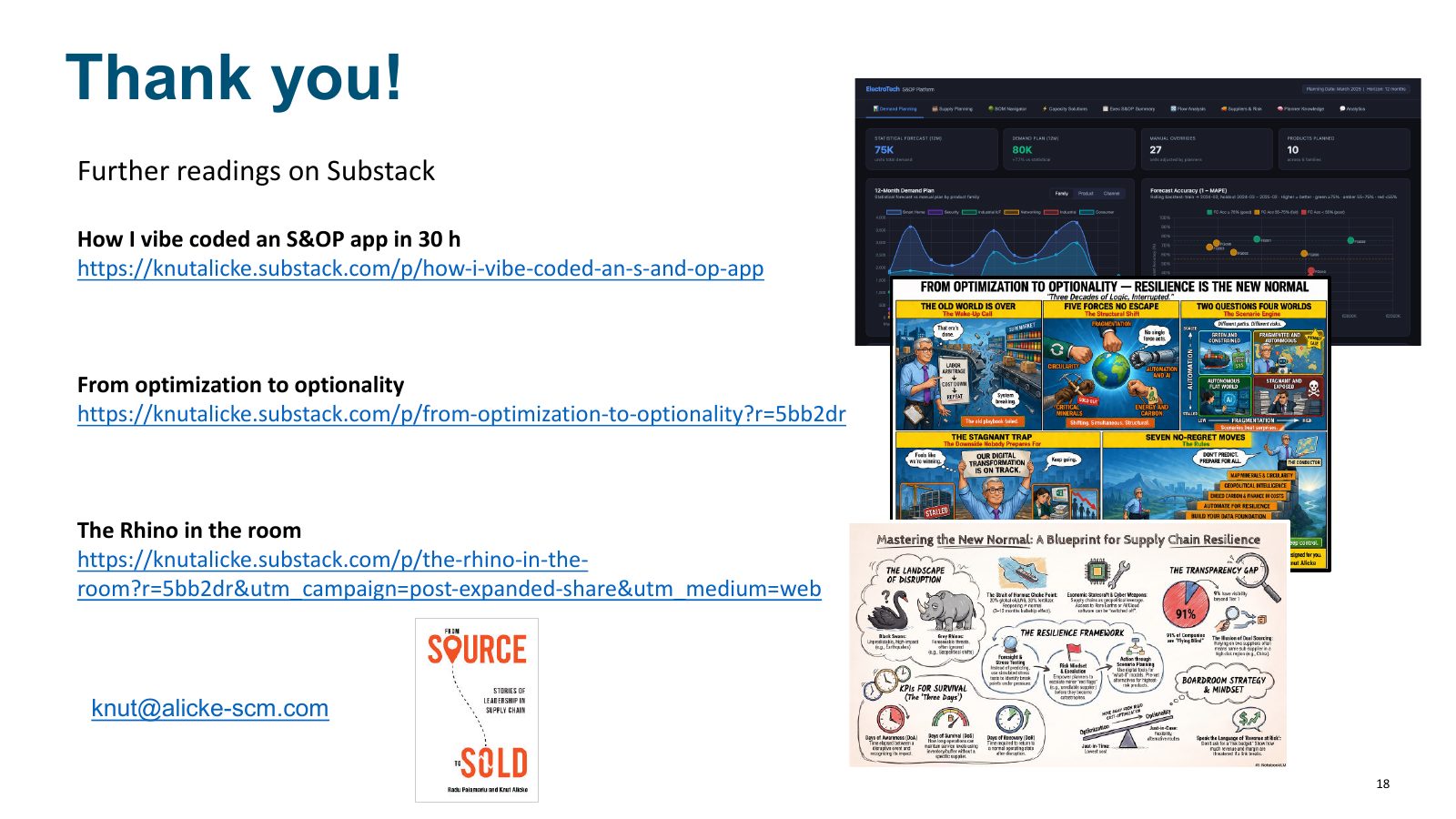
I tested how far this goes myself and vibe coded an end-to-end planning app in 30 hours. It is an MVP, not an industrial system. But it shows where the value sits: in deep business knowledge that guides and challenges the model. Let standard software provide the core, and let the subject matter experts build the specifics on top.
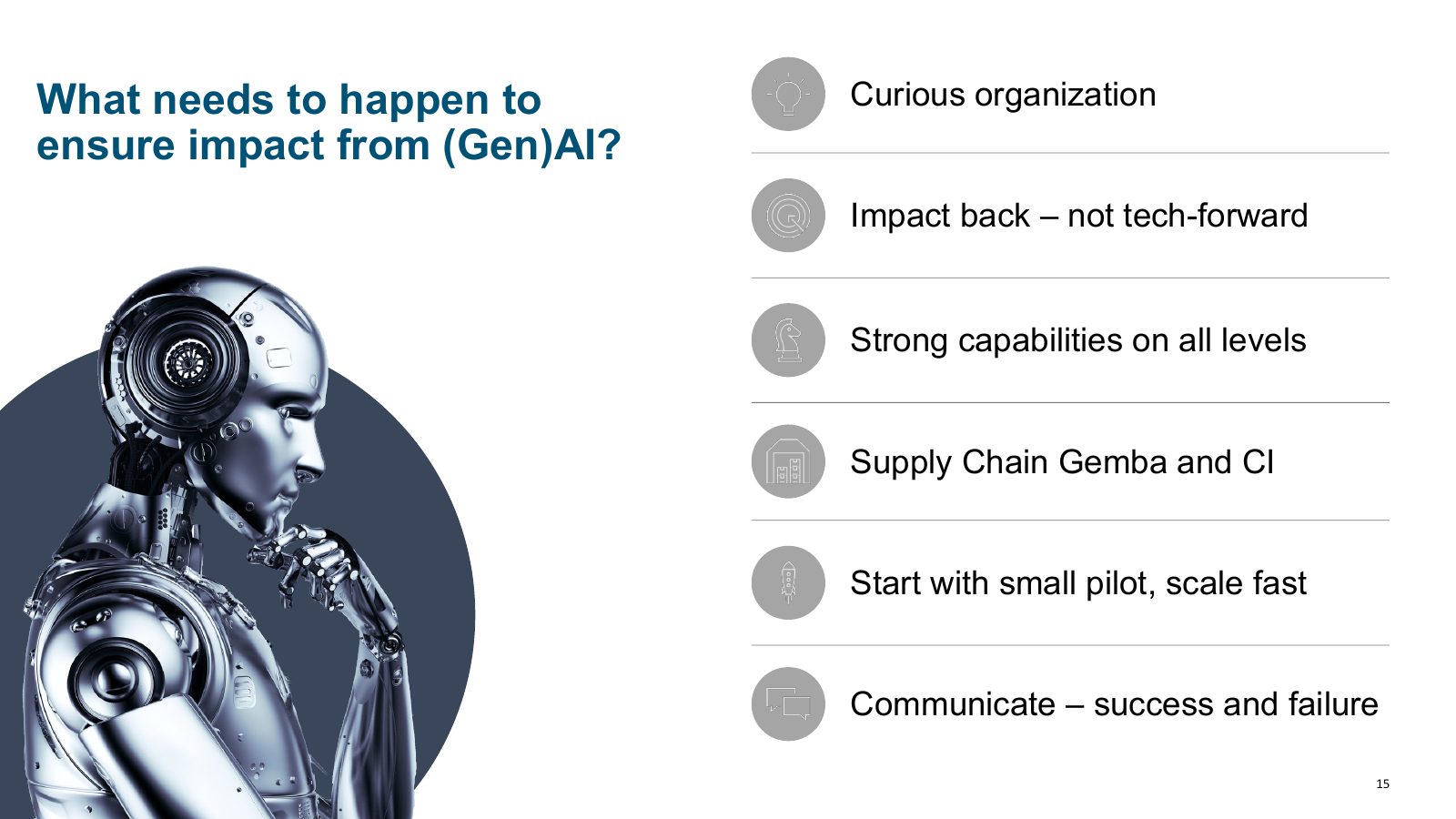
What stops impact is rarely the technology. It is the organisation: pilots that are overscoped, management without a realistic picture of what the tools can do, and above all a lack of curiosity. If your board uses AI every day in a meaningful way, you are ready to start a pilot.
The slides
All 18 slides. Use the arrows or swipe, click a slide to open it in full size, or download the complete deck as PDF.