- Event
- BVL Supply Chain CX 2026, Berlin
- Theme
- Supply Chain 2040: four scenarios, four stations, one gallery walk
- Format
- Interactive session, four flipchart stations and group presentations
- Output
- Four annotated posters and the key messages the groups presented themselves
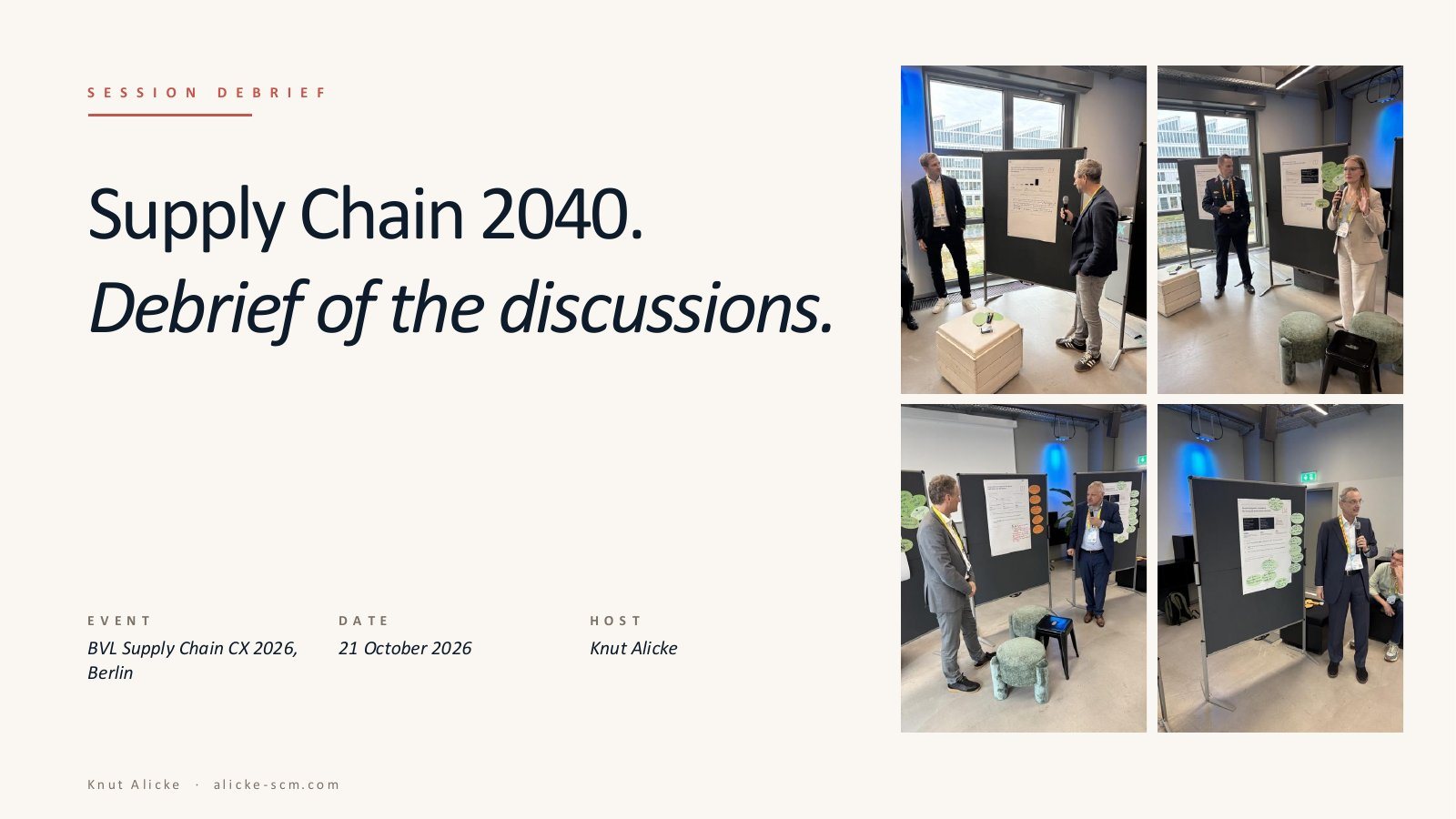
A keynote tells a room what someone else thinks. This session asked the room to write it down. Four flipchart stations, four groups, and a gallery walk in which each group presented its own station to everyone else.
What follows is not my synthesis of the future. It is what the participants wrote on the posters, in their words, including the places where they struck out the question and answered something else.
Four stations, four verdicts
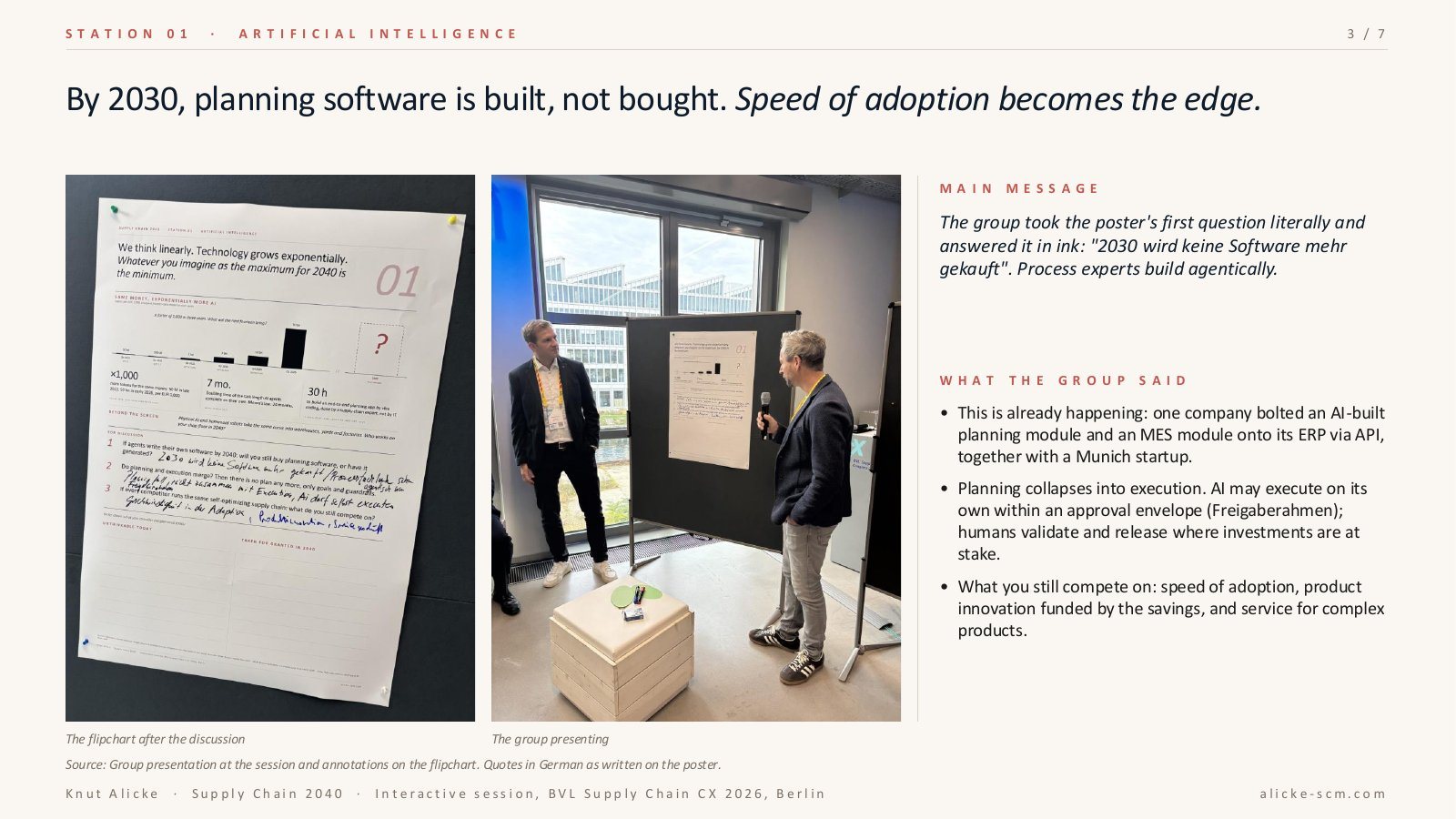
- Artificial intelligence: planning software will be built, not bought. The group took the first question literally and answered it in ink: “2030 wird keine Software mehr gekauft”. Process experts build agentically. It is already happening — one company bolted an AI-built planning module and an MES module onto its ERP via API. Planning collapses into execution, AI executes on its own within an approval envelope (Freigaberahmen), and humans validate and release where investments are at stake. What you still compete on: speed of adoption, product innovation funded by the savings, and service for complex products.
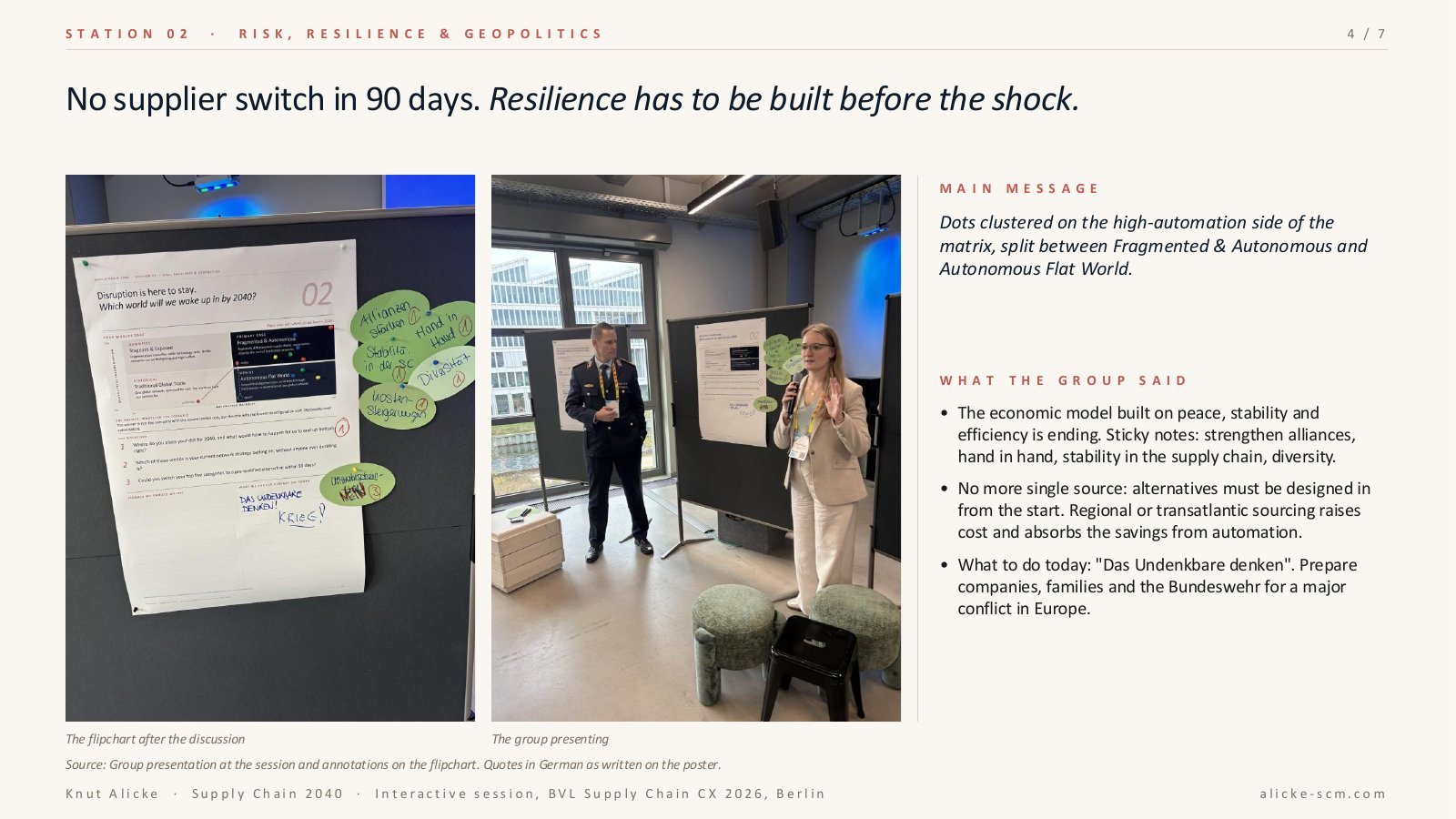
- Risk, resilience and geopolitics: nobody can switch suppliers in 90 days. Dots clustered on the high-automation side of the matrix, split between Fragmented & Autonomous and Autonomous Flat World. On question three the group struck “unlikely” and wrote “NEIN”. The economic model built on peace, stability and efficiency is ending: no more single source, alternatives designed in from the start, and regional or transatlantic sourcing that raises cost and absorbs the savings automation creates. What to do today: Das Undenkbare denken — prepare companies, families and the Bundeswehr for a major conflict in Europe.
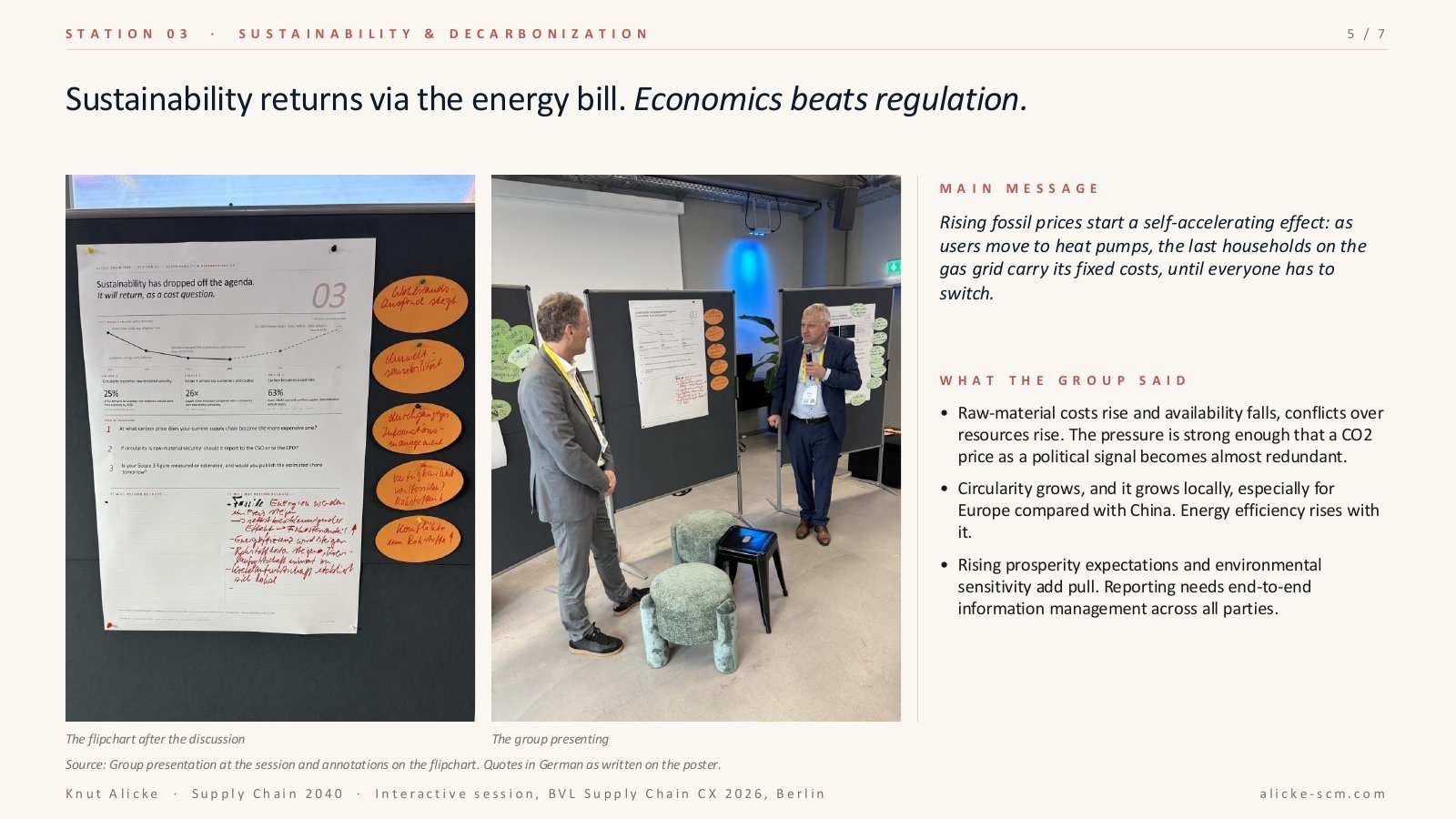
- Sustainability and decarbonization: it returns through the energy bill. Rising fossil prices start a self-accelerating effect — as users move to heat pumps, the last households on the gas grid carry its fixed costs, until everyone has to switch. Raw-material costs rise and availability falls, and the pressure is strong enough that a CO2 price as a political signal becomes almost redundant. Circularity grows, and it grows locally. Reporting needs end-to-end information management across all parties.
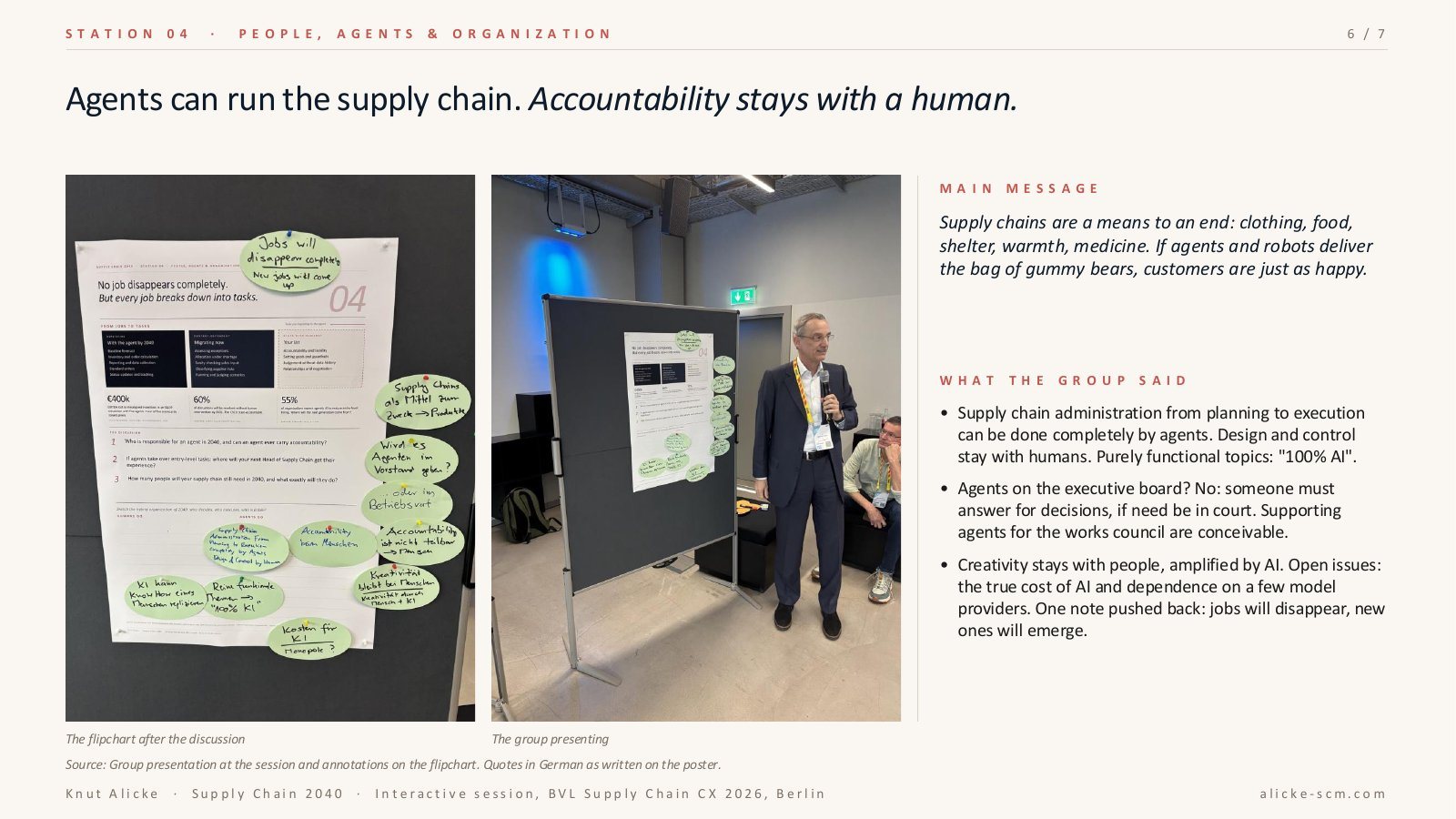
- People, agents and organization: agents can run the functions, accountability stays human. Supply chains are a means to an end — clothing, food, shelter, warmth, medicine. If agents and robots deliver the bag of gummy bears, customers are just as happy. Administration from planning to execution can be done completely by agents; design and control stay with humans. Agents on the executive board? No: someone must answer for decisions, if need be in court. Open issues: the true cost of AI, and dependence on a few model providers.
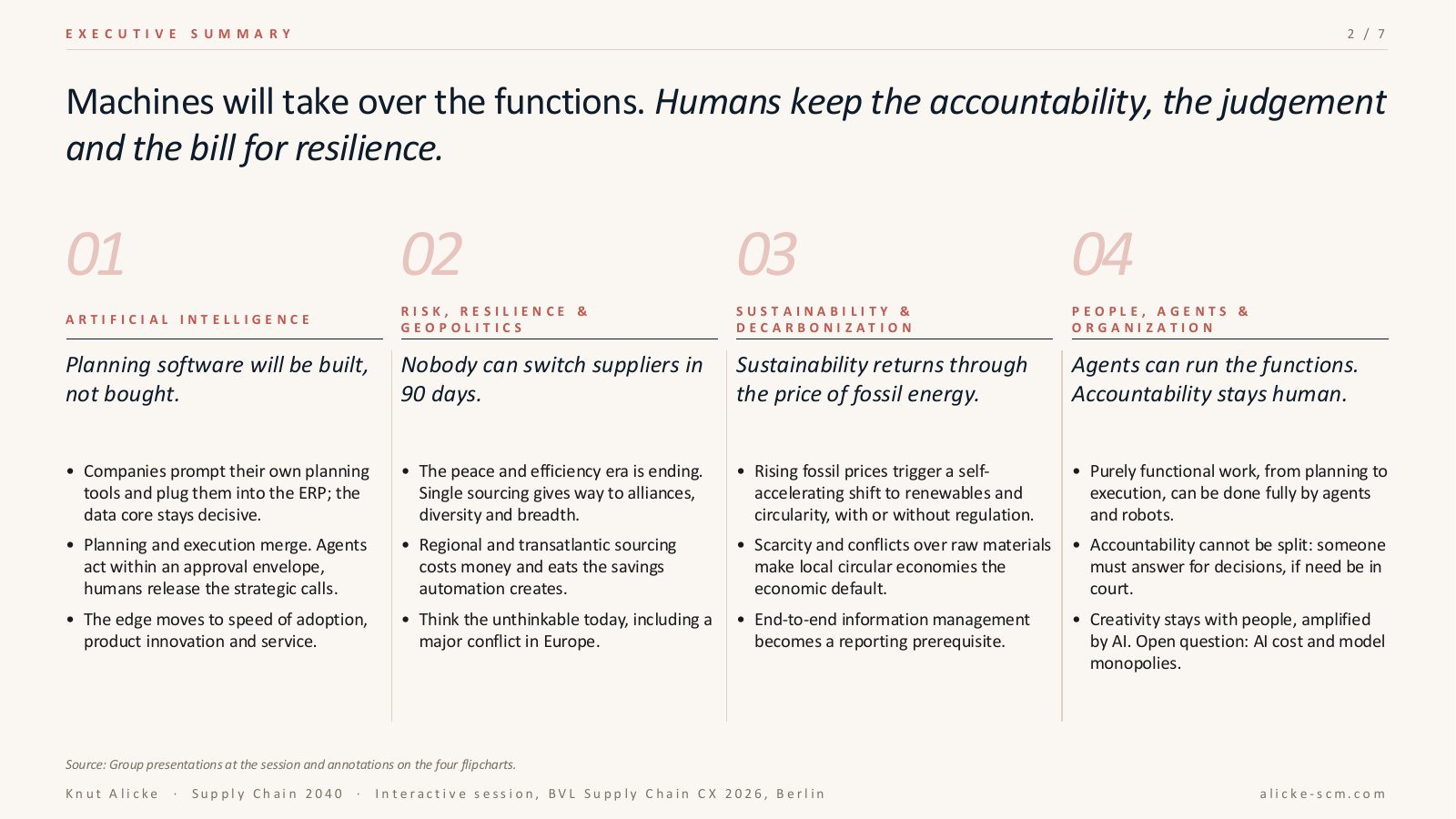
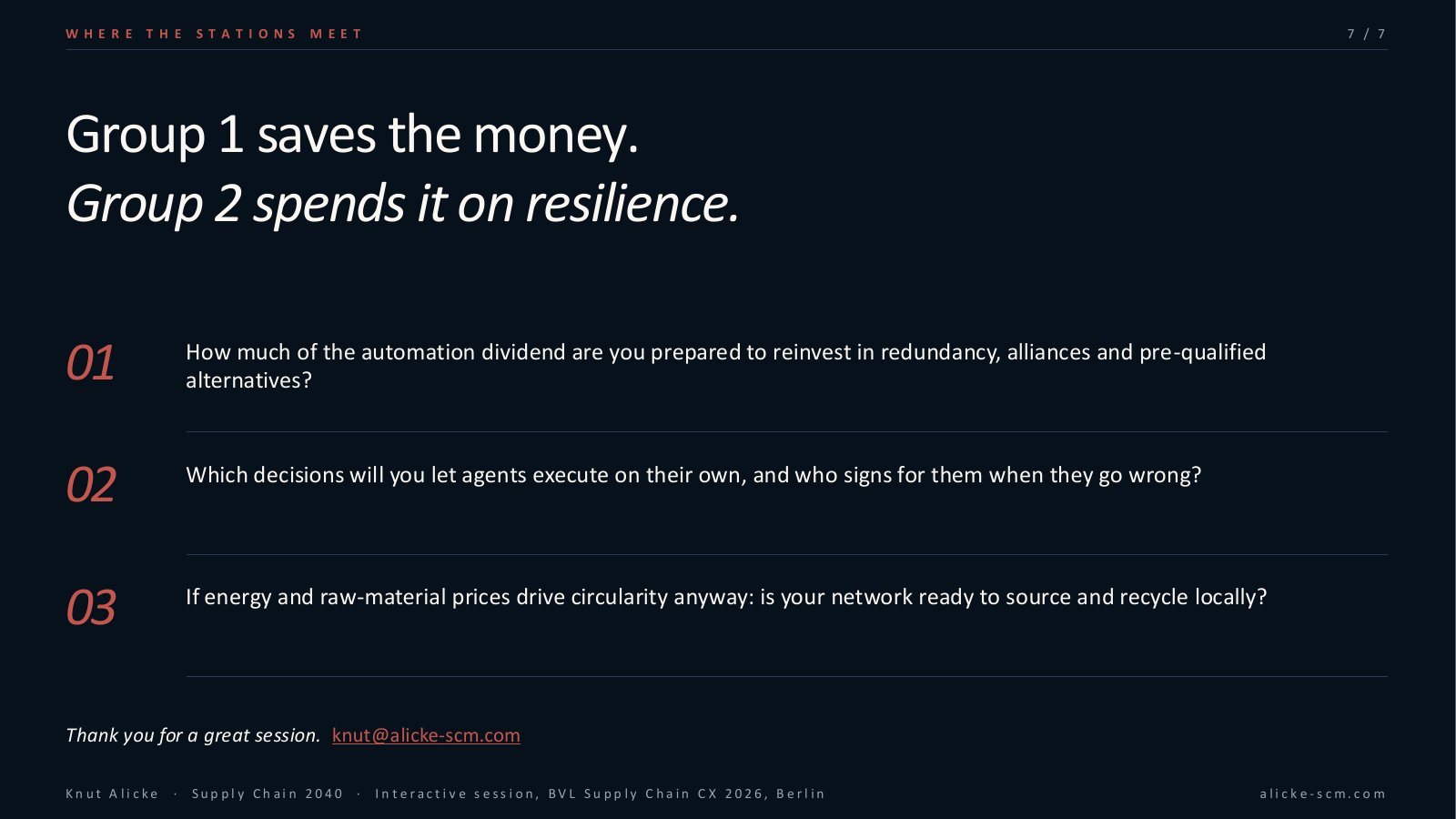
Machines will take over the functions. Humans keep the accountability, the judgement and the bill for resilience.
The debrief
All seven pages, with the annotated posters and the groups who presented them. Use the arrows or swipe, click a page to open it in full size, or download the complete debrief as PDF.